
Last updated November 22, 2026
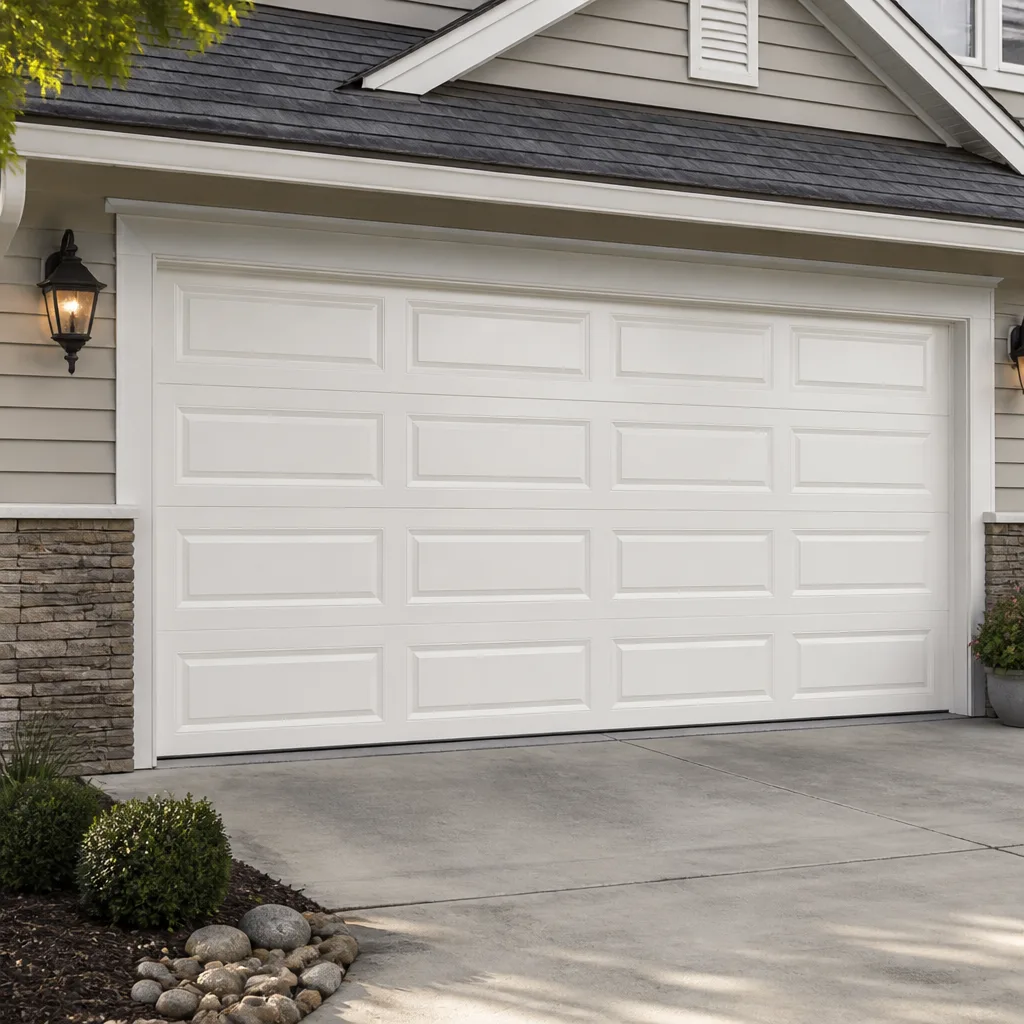 Raised-panel steel
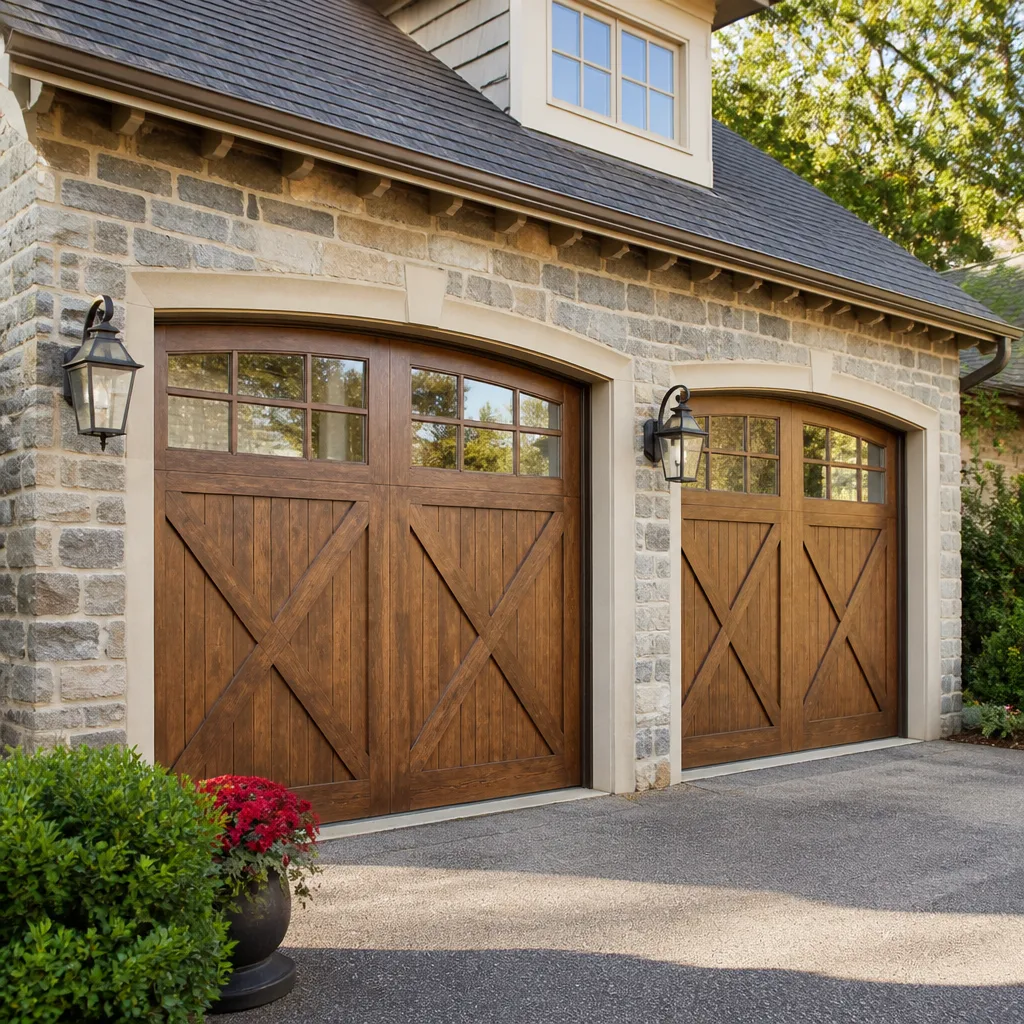 Carriage house
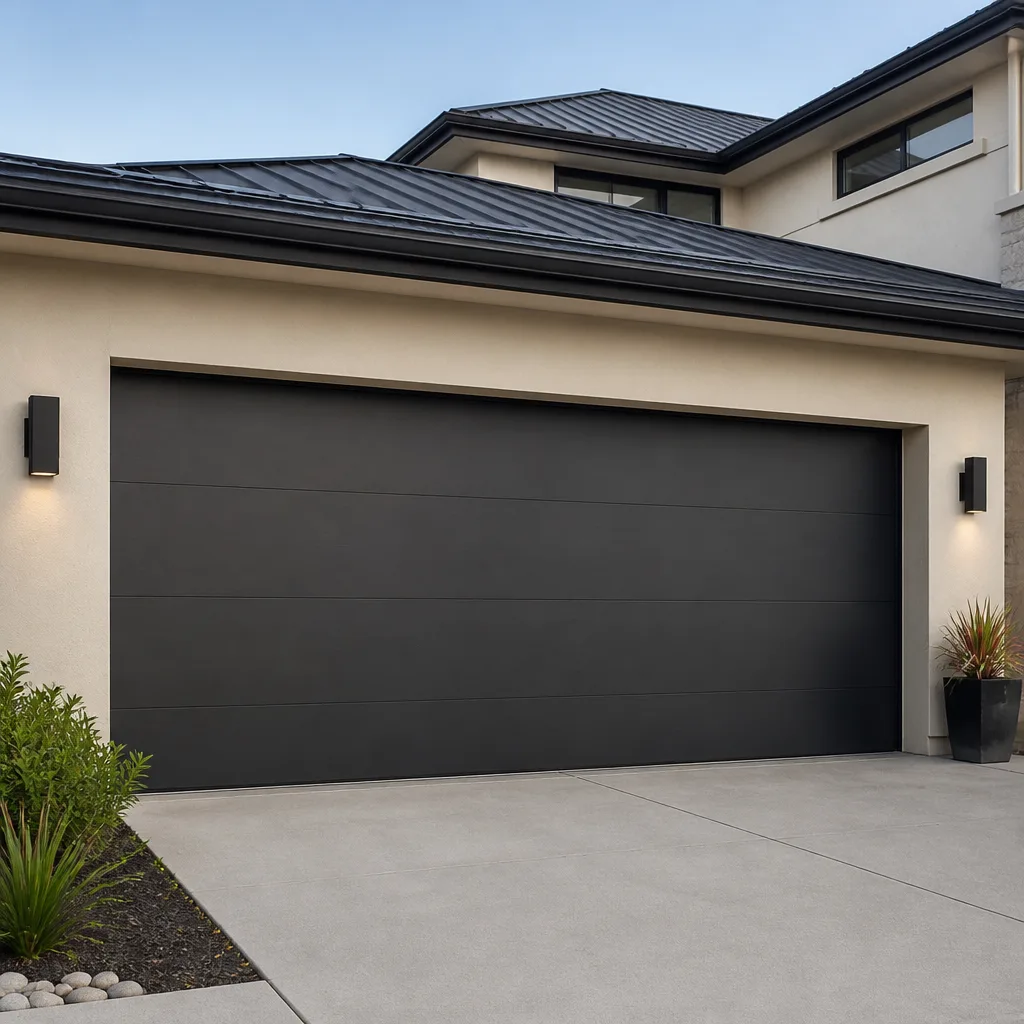 Modern flush
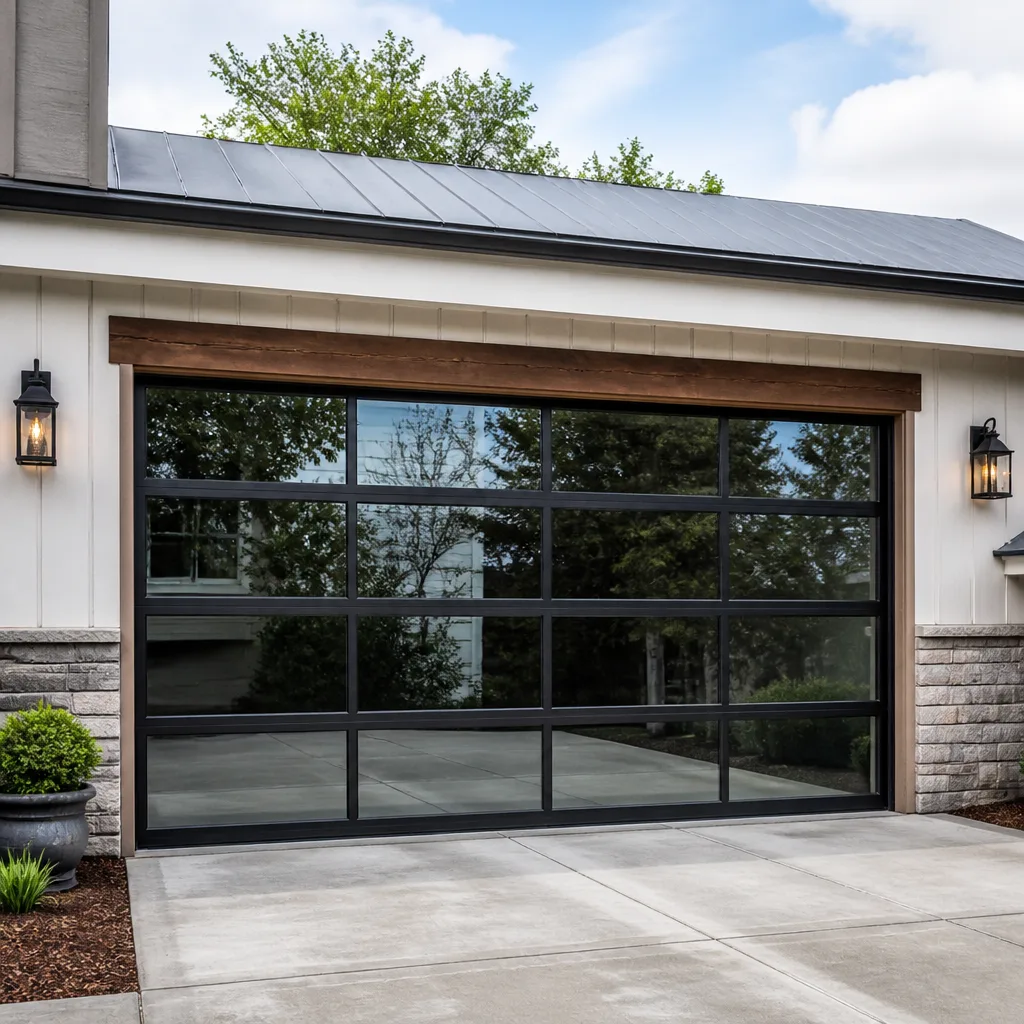 Full-view glass
 LiftMaster openers
 Chamberlain openers
Full 25-point door and opener safety check with every visit - springs, cables, rollers, tracks, and your LiftMaster or Chamberlain opener included
You get a price before we start. It does not change when the pro arrives.
Get your free estimateGarage Door Warning Signs: A Taunton Homeowner’s Reference Guide
A garage door that hesitates for two seconds before it moves isn’t being slow. It’s telling you the opener is working at the edge of its force capacity, which usually means the spring tension is off or the tracks need attention. Ignore that pause and the opener burns out, and you go from a tune-up to a replacement. Most homeowners read the noise, the shudder, or the crooked lift as normal wear. It isn’t. Every sound a garage door makes and every inch it drifts out of line points to a specific component, and once you know the code, you can decide whether to watch it, adjust it yourself, or call someone now. This guide is written from Taunton, where the freeze-thaw swings of a Massachusetts winter work hardware harder than most people realize.
Quick Answer
The warning signs that matter most on a garage door are unusual noises (grinding, popping, squealing, rattling), a door that moves unevenly or jerks, frayed or slack cables, and an opener that strains, reverses for no reason, or stops mid-travel. Any grinding, popping, or visible cable damage means stop using the door and call a professional the same day. Squeaks, rattles, and slow rollers can usually wait for a scheduled appointment within the week.
Styles & brands we work with
- Raised-panel steel
- Carriage house
- Modern flush
- Full-view glass
- LiftMaster openers
- Chamberlain openers
Table of Contents
- What the Noise Is Telling You: A Garage Door Sound Glossary
- The Visual Tells in Your Cables
- Why Your Door Lifts Unevenly (and What It Means)
- Using Your Opener as a Diagnostic Tool
- The Five-Minute Visual Inspection
- Same-Day Call vs. Appointment Within the Week
- How Taunton Weather and Housing Shape Wear
- Repair or Replace? Reading the Signals
What the Noise Is Telling You: A Garage Door Sound Glossary
A garage door is a machine with a small number of moving parts, and each one fails with its own signature sound. Learning to separate them is the single most useful skill a homeowner can develop, because the difference between a $12 hinge and a snapped spring is often just a matter of which noise you’re hearing. Here’s how we break down the four sounds that come up most.
Grinding
Grinding is metal-on-metal contact, and it’s the sound that most reliably means stop. It usually points to worn or seized rollers dragging in the track, a bent track section the roller can’t pass cleanly, or a torsion shaft or bearing plate that’s lost lubrication and is grinding against itself. Grinding rarely fixes itself and tends to accelerate, so it earns a same-day call.
Popping
A sharp pop, especially one that repeats at the same point in the door’s travel, is often a torsion spring or a hinge under load. A torsion spring that pops once and then the door won’t lift is a broken spring, and the door should stay down. Popping that happens as a roller crosses a track joint usually means a loose track or a roller that’s jumped its edge. Either way, popping is a call-now signal.
Squealing
Squealing is friction without damage yet: dry rollers, a dry torsion shaft, or hinges that need a proper garage-door lubricant. It’s the most forgiving of the four sounds. A squeal that appears only in cold weather and disappears once the door has run a few times is usually just thickened lubricant and can be handled on a scheduled visit.
Rattling
Rattling points to loose hardware: hinges, brackets, bolts, or the door panels themselves working against each other. On older steel doors, especially the Wayne Dalton and Craftsman models we see throughout Taunton, rattling often means the panel fasteners have backed off over years of thermal cycling. It’s rarely urgent, but left alone it wears the mounting holes oval and turns a tighten-up into a panel replacement.
One habit worth building: stand in the driveway and listen with the door closed, then again with it open. The sound at the start of travel tells you about springs and the opener; the sound mid-travel tells you about rollers and track. They’re different diagnostic zones.
The Visual Tells in Your Cables
Cables are the most overlooked part on a garage door and the one most likely to cause a sudden, dangerous failure. They run from the bottom corners of the door up to the drums at the top of the torsion shaft, and they carry the full weight of the door in tension. When a cable fails, the door drops. Here’s what to look at, and when.
The three cable conditions that matter
- Slight fraying. One or two broken strands near the drum or the bottom bracket. This is early-stage wear. It’s the point where a scheduled replacement within the week is the right move, because a frayed cable loses strength fast and a snapped one turns a controlled repair into an emergency.
- Uneven coiling on the drum. The cable should wind in neat, even layers. If it’s crossing over itself, piling on one side, or looks slack at the top, the drum or cable is out of alignment and the door is being pulled unevenly. This is a call-now condition because a cable that jumps the drum can drop the door.
- One cable slack when the door is closed. Both cables should be under tension when the door is down. A slack cable means the door is being held by one side only, which stresses the springs, the shaft, and the panels. Stop using the door.
You can check cable condition from the ground with the door closed: look at the cables running vertically between the bottom bracket and the drum, and check the drum area at the top for neat winding. Never reach into the drum or spring assembly to feel for slack, and never try to rewind a cable yourself. The torsion system stores enormous energy, and a cable under load can cause serious injury. If something looks wrong, keep hands clear and have it inspected by a trained technician.
In our experience across Taunton, the cables on a door that sits in an unheated garage through a Massachusetts winter take more abuse than most homeowners expect, because the steel expands and contracts with the temperature swings and the lubricant thickens when it’s cold. A quick visual check each season catches most of it.
Why Your Door Lifts Unevenly (and What It Means)
Watch your door from the side as it rises. It should lift level, at roughly the same speed on both sides, with no visible twist. If one side lags, you’re seeing one of three problems, and they need different responses.
Spring balance
If the door lifts crooked and the gap is consistent, the springs are out of balance. A torsion system has two springs (sometimes one, on lighter doors), and if one has lost tension, the door is being lifted harder on one side. The result is a twisting door that strains the opener. Spring balance is a specialist job; high-tension springs are dangerous and shouldn’t be adjusted by anyone untrained.
Track alignment
If the door lifts crooked and the gap changes as it rises, the tracks are usually the culprit. A track that’s been bumped, or one that’s drifted out of plumb over the years, guides the roller off its line. You can usually see it: the vertical tracks won’t look parallel, or a track’s mounting brackets will be visibly bent. Track alignment is often a scheduled-appointment item, unless the door is binding hard enough to strain the opener.
Cable length or drum winding
If one side consistently hangs lower and the cables look different, the cables are pulling to different lengths. That’s usually a winding problem on the drum or a stretched cable, and it needs to be corrected before it becomes a cable failure. Because this involves the cable and drum assembly, it’s a call-now condition.
The general rule: uneven motion with a consistent gap points toward springs, uneven motion with a changing gap points toward track, and uneven motion with visibly different cables points toward cables. Any of the three that makes the door hard for the opener to lift is a same-day concern.
Using Your Opener as a Diagnostic Tool
Your opener isn’t just a motor. Its behavior tells you whether the door’s problem is mechanical or electronic. The key skill is separating a sensor trip from a force-limit trip, because they look similar from inside the garage but need different fixes.
Sensor problem vs. mechanical resistance
When a door reverses before it reaches the floor, or stops partway and goes back up, one of two things is happening. A safety-sensor trip is electrical: the photo-eye at the bottom of the track is misaligned, dirty, or blocked. A force-limit trip is mechanical: the door is heavy enough that the opener hits its built-in force threshold and reverses to protect itself.
Here’s how to tell them apart:
- Look at the opener lights. Most LiftMaster, Chamberlain, and Genie openers blink a light code when they’ve reversed on a sensor trip. A steady or different pattern usually points to force.
- Check the photo-eyes. Look for dust, cobwebs, or a knocked-out alignment on the two small lenses at the bottom of the tracks. Realign them until each indicator light glows steady, and try again.
- Disconnect the opener and try the door by hand. With the door in manual release, a balanced door should lift and lower with moderate effort. If it’s much heavier than that, the opener is reversing because of mechanical resistance, not sensors.
If the door is heavy by hand, don’t keep running the opener on it. The motor will burn out running against a stiff door. On the smart-home LiftMaster and Chamberlain/myQ openers we see most often in Taunton, the app logs also record reversals, which can help pin down whether the problem is consistent (mechanical) or intermittent (sensor).
One more tell: an opener that strains and stalls partway through travel, with no sensor involved, is usually hitting mechanical resistance on the track or springs. If that’s happening, our garage door opener repair work starts with diagnosis, because replacing an opener without fixing the mechanical cause just puts the same strain on a brand-new unit.
The Five-Minute Visual Inspection
You don’t need tools to do most of this. Once a month, with the door closed and the opener off, walk the door and look. Five minutes catches the majority of developing problems.
- Check the cables. Look for fraying, uneven coiling on the drums, or any slack on one side. Hands off the drums and springs.
- Check the springs. A torsion spring that looks visibly broken into two pieces, or a gap between the coils, means the door stays down until it’s repaired. On extension-spring doors, watch for a spring that looks stretched out of shape.
- Check the rollers. Rollers should be seated squarely in the track. Look for cracks in the roller wheels, flat spots, or rollers that have tilted in the hinge.
- Check the hinges and brackets. Bracket bolts back out over time. Look for gaps between the bracket and the door panel, or a bracket that’s visibly bent.
- Check the bottom rubber and balance. The rubber seal should sit flat on the floor with no gap on either side. Lift the door halfway in manual release; it should stay put. If it drifts down or up on its own, it’s out of balance.
- Check the panel faces and the door’s alignment. A panel that’s bowed, cracked, or sitting off-square strains everything else. On older Amarr and Raynor doors, panel stress often shows up first at the hinge points.
The one part you should never inspect closely by hand is the torsion assembly at the top of the door. Springs, cables, and drums are under constant tension. A trained technician uses proper winding bars and knows how to release that tension safely. That’s the whole reason garage door spring repair is its own specialty.
Same-Day Call vs. Appointment Within the Week
Not every warning sign is an emergency, and treating them all as one wastes time and money. Here’s the split we use.
The three signs that warrant a same-day call
- A door that won’t open, or won’t close. A garage door stuck open is an open invitation to anyone walking by, and a stuck door traps your car. This is a security problem, not just an inconvenience. Call now.
- Grinding, popping, or visible cable damage. Any of these means the door is running with a component that’s actively failing. Keeping it moving makes the failure worse.
- Any spring break or a door that drops or reverses unexpectedly while the opener is running. Springs and cables hold the door up; a failure puts the door in free fall. Stop using it.
The signs that can wait for a scheduled appointment within the week
- Squealing that shows up in cold weather and eases once the door has run a few cycles.
- Rattling from loose hardware with no other symptoms.
- A worn bottom rubber seal or a door that sits slightly off the floor.
- A slowly responding opener on a door that otherwise lifts smoothly.
- Rollers that look worn but are still seated correctly.
If you’re on the fence, call. We’ll ask a few questions on the phone to help you sort out which category your door is in. The estimate is free, and pricing is set by a written estimate before any work starts, so you won’t get a surprise invoice. For a time-sensitive failure, we run emergency service, and our technicians have up to 12 years of experience sorting out spring and cable failures. If you’re dealing with a door that just broke, our garage door repair team is set up to handle it.
How Taunton Weather and Housing Shape Wear
Garage doors in Taunton take a specific beating that door hardware in warmer, more stable climates doesn’t. A full Massachusetts winter brings repeated freeze-thaw cycles, and each cycle moves the steel and wood of your door and garage frame through a small expansion and contraction. Over a season, that’s thousands of small movements. The hardware that takes the most of it is the hinges, the panel fasteners, and the spring anchor. That’s why rattling and backing-out bolts show up more in this region than the sound-based guides usually suggest.
Springs wear faster in a climate with big temperature swings too. Torsion springs are rated by cycle count, and each open-and-close counts as one. A door that cycles several times a day in a cold garage is doing those cycles with hardening lubricant and a steel shaft that’s already contracted. If your door has been running reliably for a decade and then one morning it won’t lift, the temperature drop overnight is a common reason the already-tired spring chose that day to break. That’s worth knowing before you assume the opener has failed.
The housing stock matters as much as the weather. Much of Taunton’s older residential stock has detached or unheated garages, where doors sit through winter without any ambient warmth. Newer builds with attached garages run warmer and drier, but they’re often the ones with heavy insulated doors, and those weigh more and put more load on the springs and opener. Track wear and roller drag are common complaints on both, for different reasons. Whether you’re in a newer subdivision or an older Taunton neighborhood, the inspection routine above is the same. What changes is how quickly the parts around the door wear.
Repair or Replace? Reading the Signals
Sometimes the warning signs add up to a door that’s past the point where repairs make sense. Here are the signals that point toward replacement rather than another repair visit.
- Multiple components failing at once. A door with tired springs, worn rollers, a strained opener, and a cable that’s on its way out is usually a door that’s telling you the whole system is at end of life.
- Structural panel damage. A panel that’s cracked, bowed, or separated from its hinge fasteners is expensive to fix, and on some doors it’s not worth fixing. A new door that’s properly installed eliminates the structural weakness.
- A repeated repair history. If you’ve had the same door serviced for the same problem several times, the underlying issue usually isn’t being solved, and it’s worth stepping back to look at the door as a whole.
- A door that’s simply outdated or poorly insulated. An old, thin, single-panel steel door is noisy, poorly sealed, and heavier than a modern insulated door, which strains everything downstream of it.
Replacement is a scheduled job, not a same-day one. A new door has to be measured, ordered, and installed, and the door you get is not the one that was on the delivery van. If we’re recommending a new door, it’s because installing a fresh one from a brand like Amarr or Raynor will fix more problems at once than patching the old one. That’s the point where our Taunton Garage Door Repair Pros team can walk you through the measurement and estimate.
Common Mistakes to Avoid
- Running the door on a strained opener “until it dies.” That habit is how a $150 repair becomes a $600 replacement. The opener is a symptom, not the cause, and the faster you catch the cause, the cheaper the fix.
- Treating a broken spring as a broken opener. A door that won’t lift at all is usually a spring failure, and a new opener won’t fix it. If the door is heavy by hand, the problem is mechanical.
- Spraying the wrong lubricant on the springs and tracks. WD-40 and similar products are cleaners, not garage-door lubricants. A dedicated garage-door lubricant on rollers and hinges, not the tracks themselves, is the correct approach.
- Adjusting the tracks or springs yourself. Track alignment looks straightforward until a roller jumps, and spring adjustment can cause serious injury. This is the part where a trained technician earns the call.
- Ignoring a slack or frayed cable because the door still opens. A failing cable is a load-bearing part on its way out. It doesn’t announce itself a second time before it goes.
- Skipping the seasonal inspection in Taunton. The winter freeze-thaw cycle works loose what summer left tight. A quick check each fall keeps the smaller problems small.
- Choosing a generalist handyman for a specialist job. Spring, cable, and opener diagnosis is specific work, and a specialist who works on the brand you own will do a better job than someone who dabbles. Our technicians are familiar with the LiftMaster, Chamberlain, Genie, Clopay, Amarr, Wayne Dalton, Craftsman, and Raynor doors and openers that are common in the area.
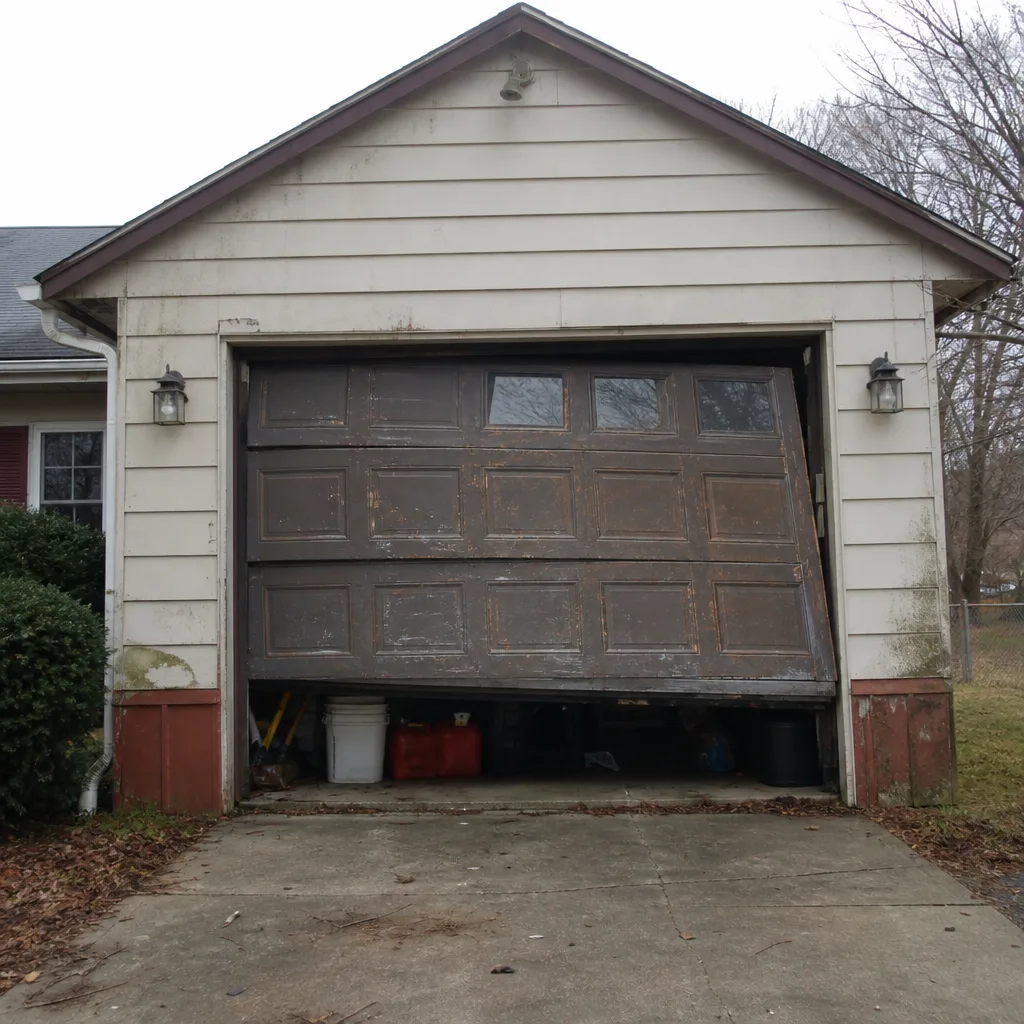
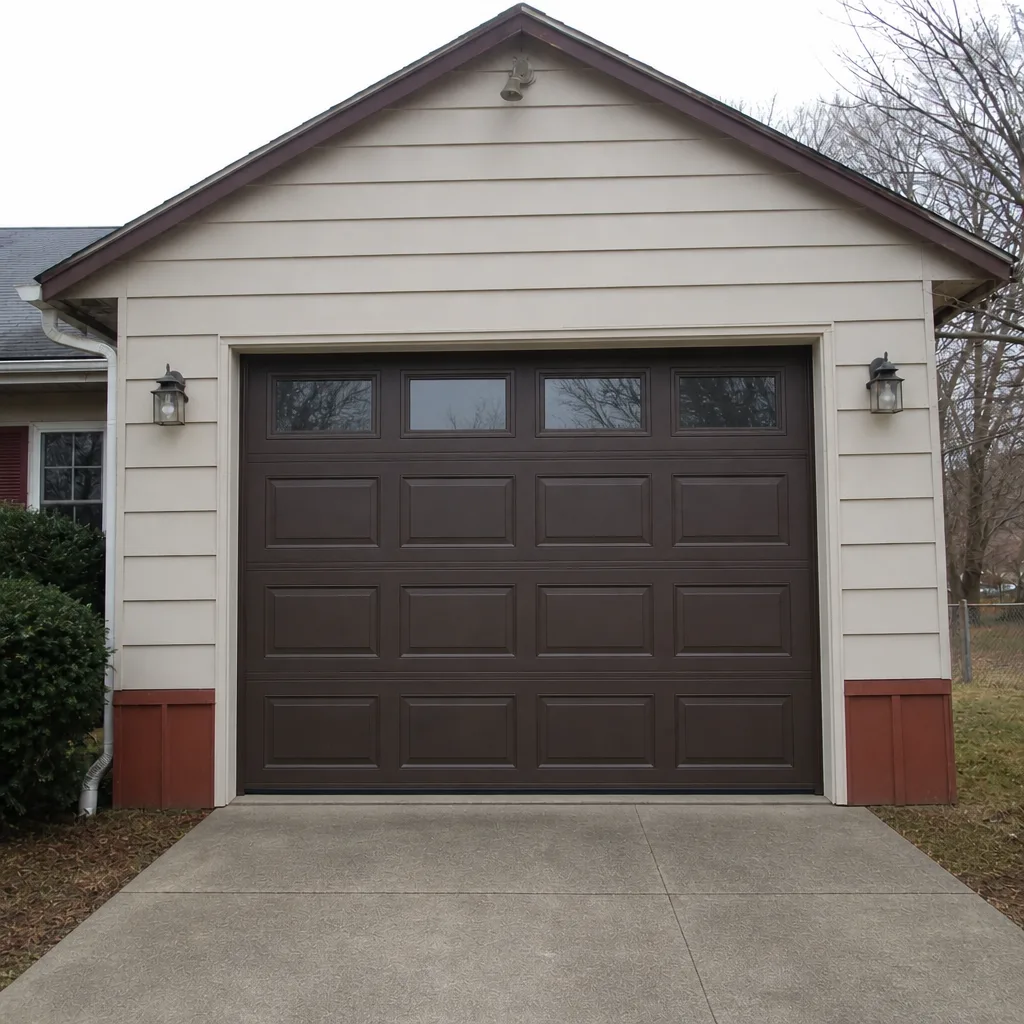
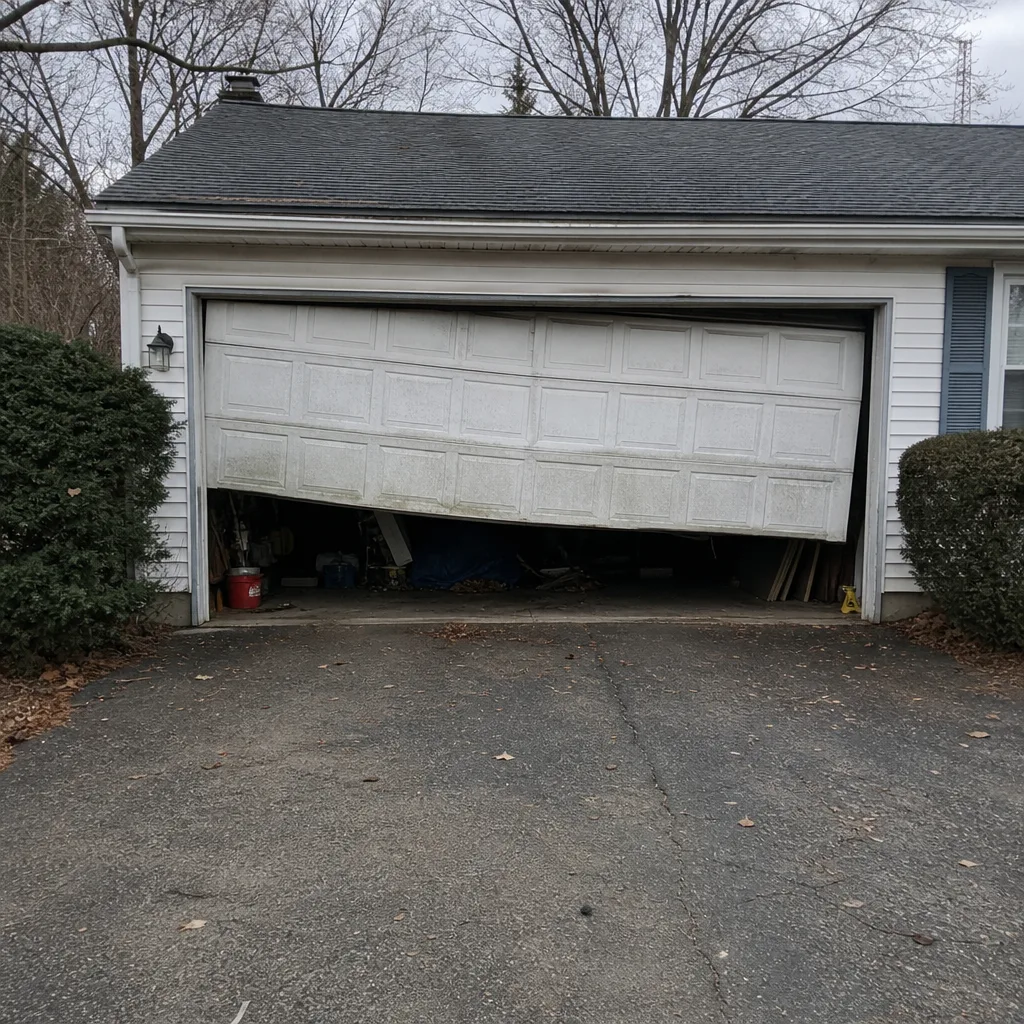
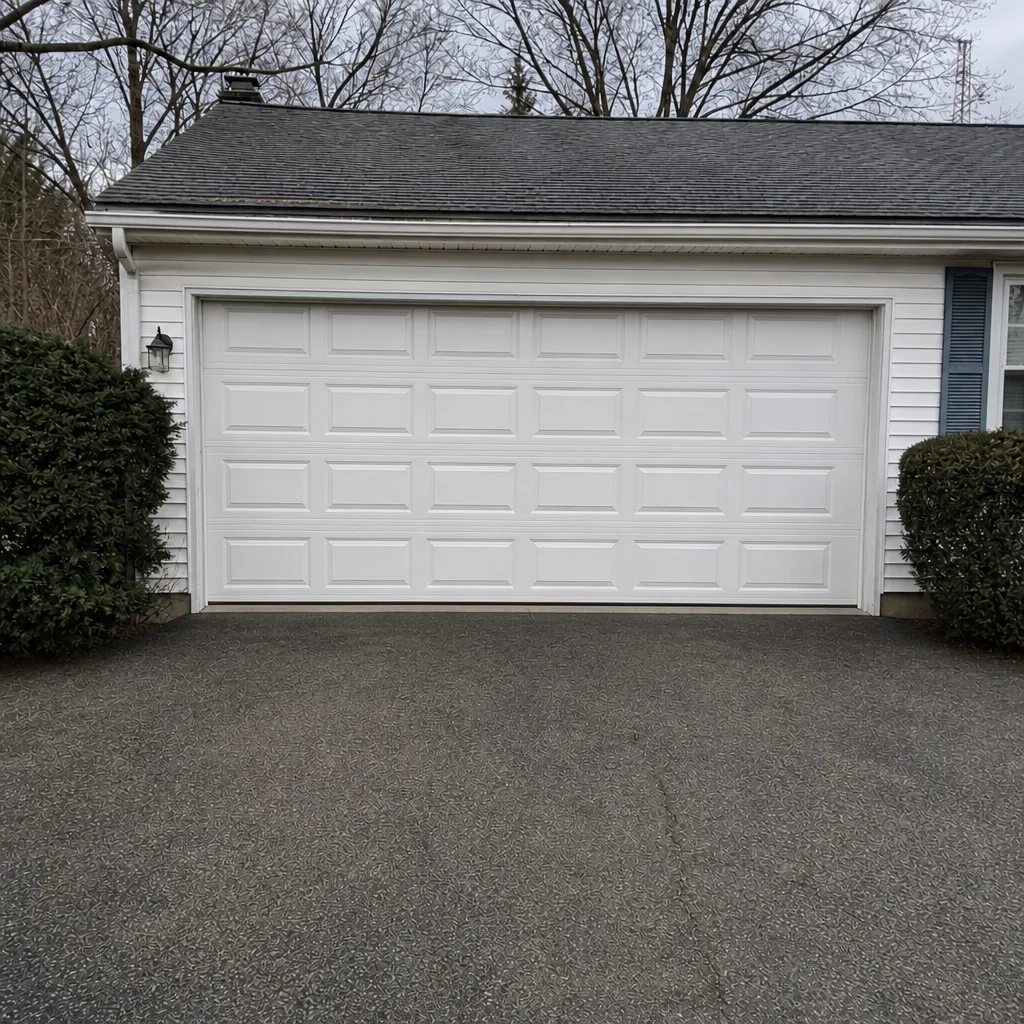
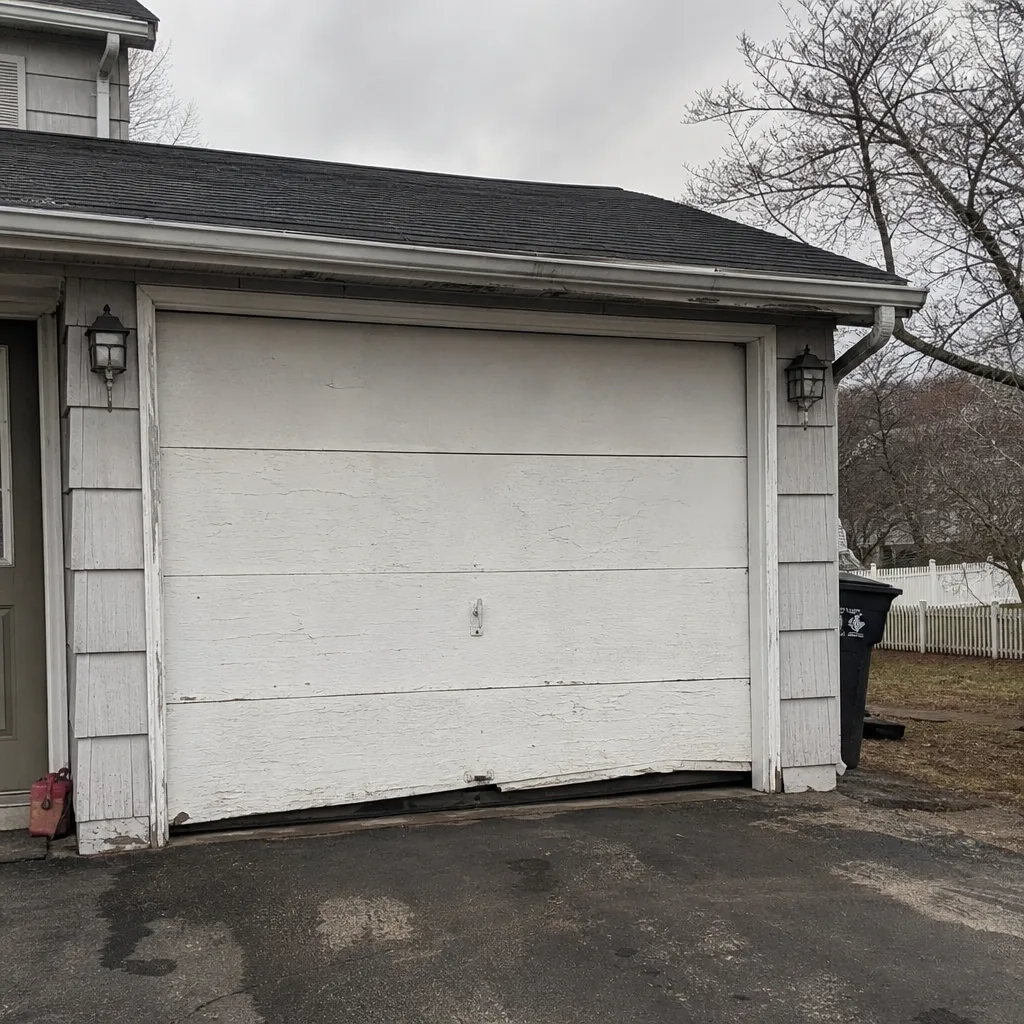
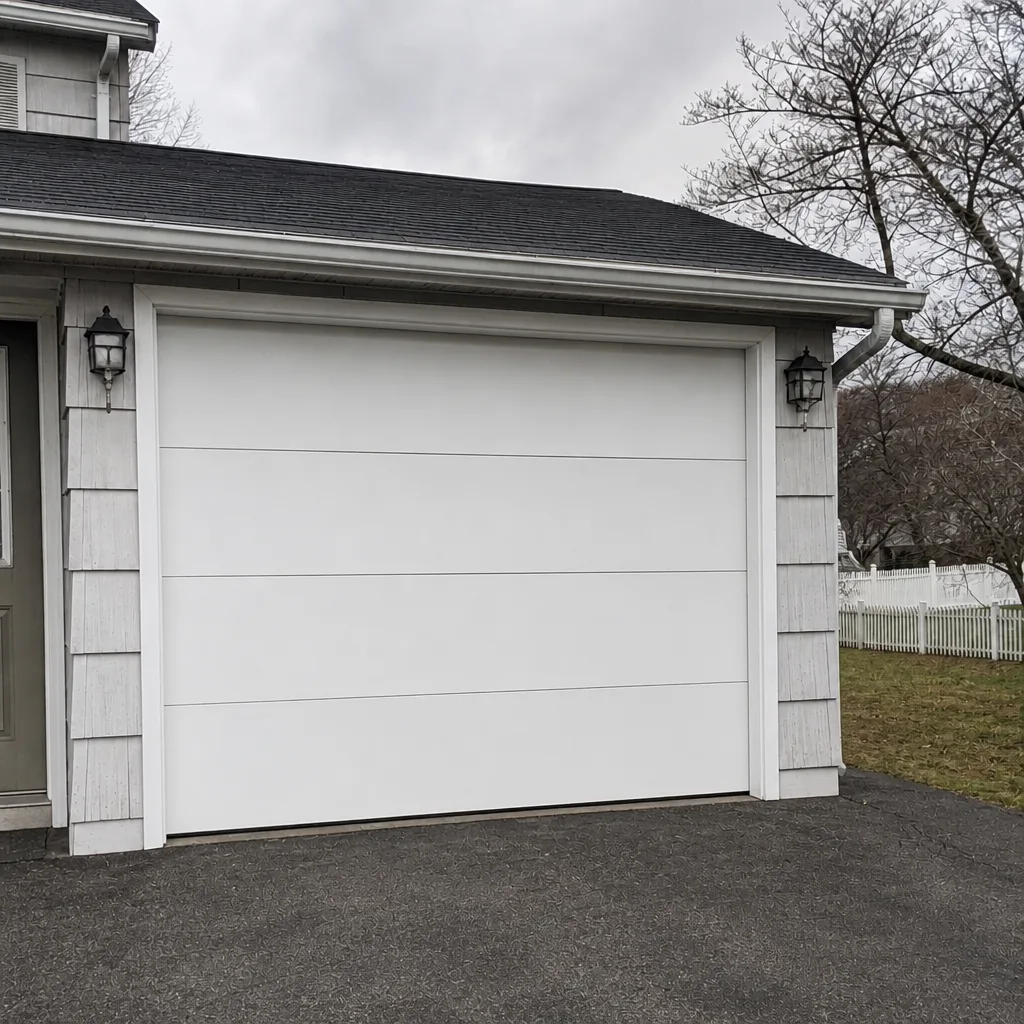
See the difference
 Before
 After
 Before
 After
 Before
 After
When to Call a Professional
Call us when the door won’t move, when you hear grinding or popping, when a cable looks slack or frayed, or when the door lifts unevenly and you can’t pinpoint why. Call if a spring has broken, if the door reverses or drops unexpectedly while the opener runs, or if the opener strains and stops. Call if a panel or hinge is visibly damaged. And call if the door has had the same problem repaired more than once, because a repeated failure usually means the underlying cause hasn’t been found. Taunton Garage Door Repair Pros offers free estimates in Taunton. Call (833) 495-0837. We answer 24/7. Fast dispatch from 7am to 7pm, Sunday through Friday, and every job on our schedule is a garage door job.
Frequently Asked Questions
The most reliable early sign is a door that hesitates or pauses at the start of its travel, which points to the opener straining against a spring that’s lost tension or a track that’s out of alignment. Catching that pause early is the difference between a tune-up and a failed opener. Call (833) 495-0837 for a free estimate, and we’ll help you figure out whether it’s springs, track, or the opener.
No. A squeal from dry hinges or rollers is usually a lubricant fix, not a repair. Squealing that appears only in cold weather and eases after a few cycles is the most common case, and it’s usually handled on a scheduled visit rather than an emergency one. If the noise is grinding or popping, that’s a different story, and it warrants a same-day call. Call (833) 495-0837.
The clearest sign of a broken torsion spring is a door that won’t lift at all when you try it by hand in manual release, usually after a loud pop. A torsion spring that’s broken is also often visible from below as a gap between coils where the spring has split. The door should stay down and not be run with the opener. Call (833) 495-0837 for a free estimate.
In most cases, no. Track adjustment looks simple, but it moves the roller path, and a track that’s off by even a little can cause the rollers to bind or jump. It’s worth a call to a specialist. Call (833) 495-0837 for a free estimate, and we’ll tell you whether it’s a track adjustment or something else.
If the door lifts crooked with a consistent gap between the two sides, it’s usually a spring balance issue; if the gap changes as the door rises, it’s usually the tracks. If the cables themselves look like they’re pulling to different lengths, that’s a cable or drum problem and it’s the more urgent of the three. Call (833) 495-0837, and we’ll help you sort it out.
Call now if the door is straining, if a spring or cable is visibly damaged, or if the door reverses on its own. If it’s a squeak, a rattle, or a slowly responding opener with no other symptoms, you can wait and book an appointment within the week. Either way, call (833) 495-0837 for a free estimate, and we’ll set up the right timing.
What Happens When You Call
When you call us with a problem, the first thing we do is ask questions, not sell you a new door. We’ll ask what the door is doing, what it sounds like, and how long it’s been going on. From those answers we can usually tell you whether it’s a same-day call or something scheduled within the week, and we’ll give you an upfront price before we set the appointment. Once we’re on site, we check the springs, cables, rollers, track, and opener in that order, because the opener is the last thing to blame, not the first. The written estimate sets the final price, and nothing goes ahead without your agreement. We answer 24/7 and dispatch from 7am to 7pm, Sunday through Friday, closed Saturday. If you’d rather get a quote first, we do free estimates.
The Bottom Line
Garage doors give you plenty of warning before they fail, and most of that warning is sound, motion, and visible wear. Grinding, popping, and cable damage mean stop and call today. Squealing, rattling, and slow rollers can wait for a scheduled visit. An opener that reverses is telling you whether the problem is a sensor or the door itself, and you can tell which by checking the lights and testing the door by hand. A broken spring or a slack cable is never a do-it-yourself fix. And the fastest way to keep a Taunton door working through a Massachusetts winter is the five-minute monthly check, so the small problems never become the emergency ones.
If something on your door has started to look or sound wrong, call Taunton Garage Door Repair Pros at (833) 495-0837 for a free estimate. We’ll tell you what we think is going on, and we’ll give you a written price before any work starts. One call, one specialist, the brand you actually own.
Written by the team at Taunton Garage Door Repair Pros.