
Last updated November 22, 2026
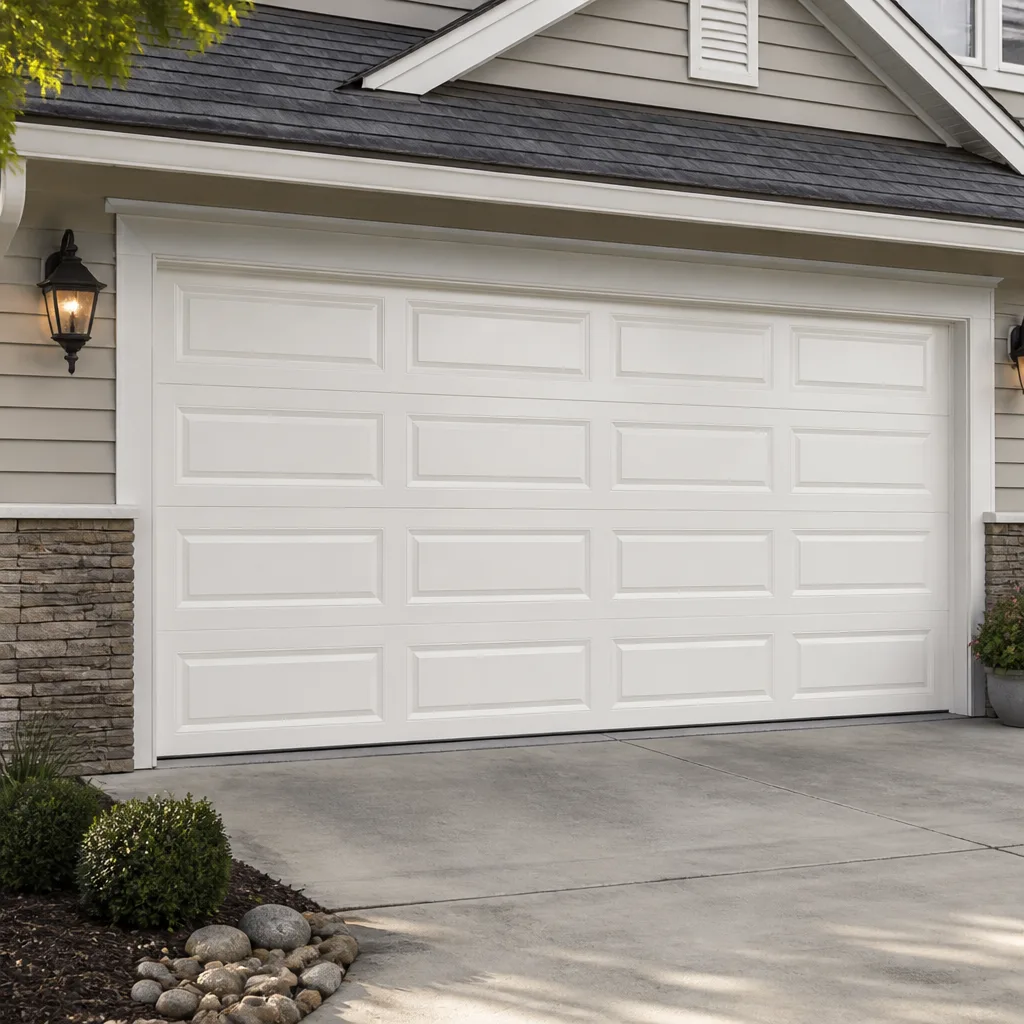 Raised-panel steel
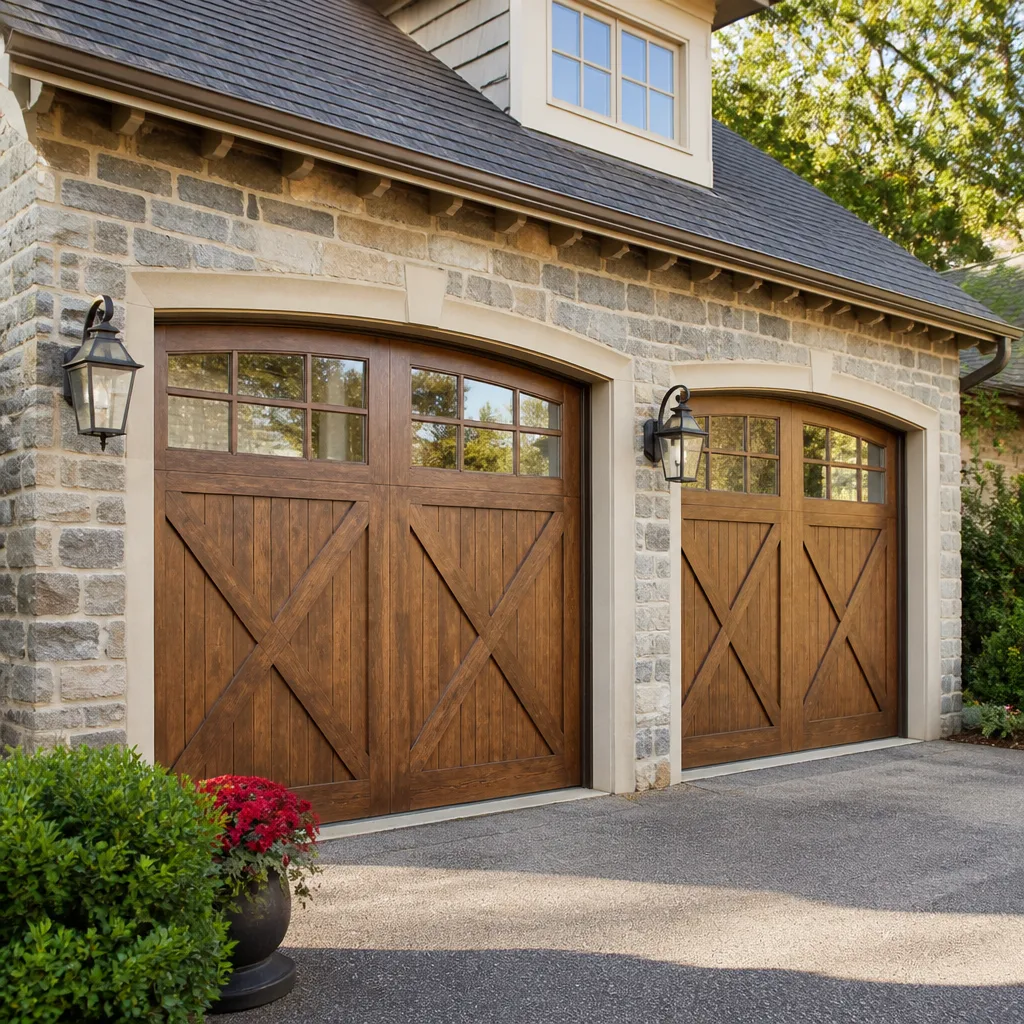 Carriage house
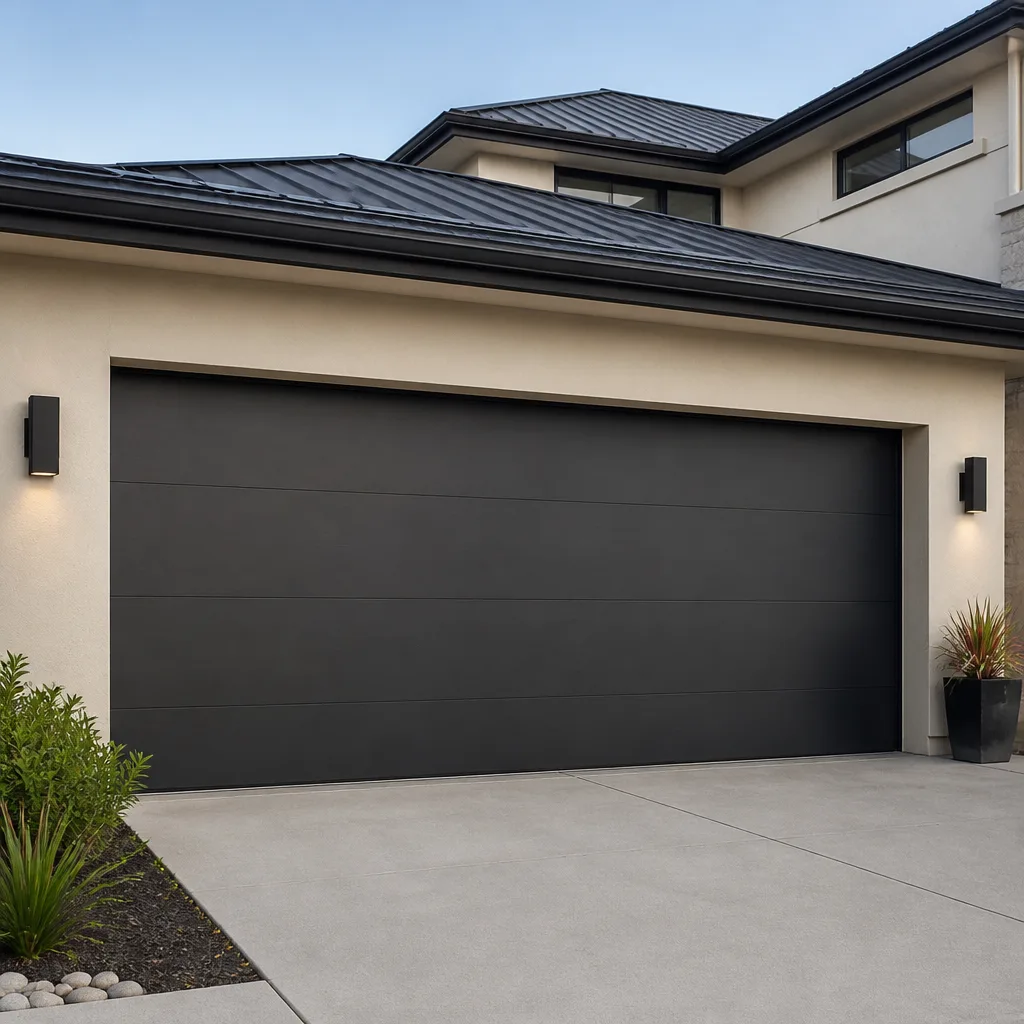 Modern flush
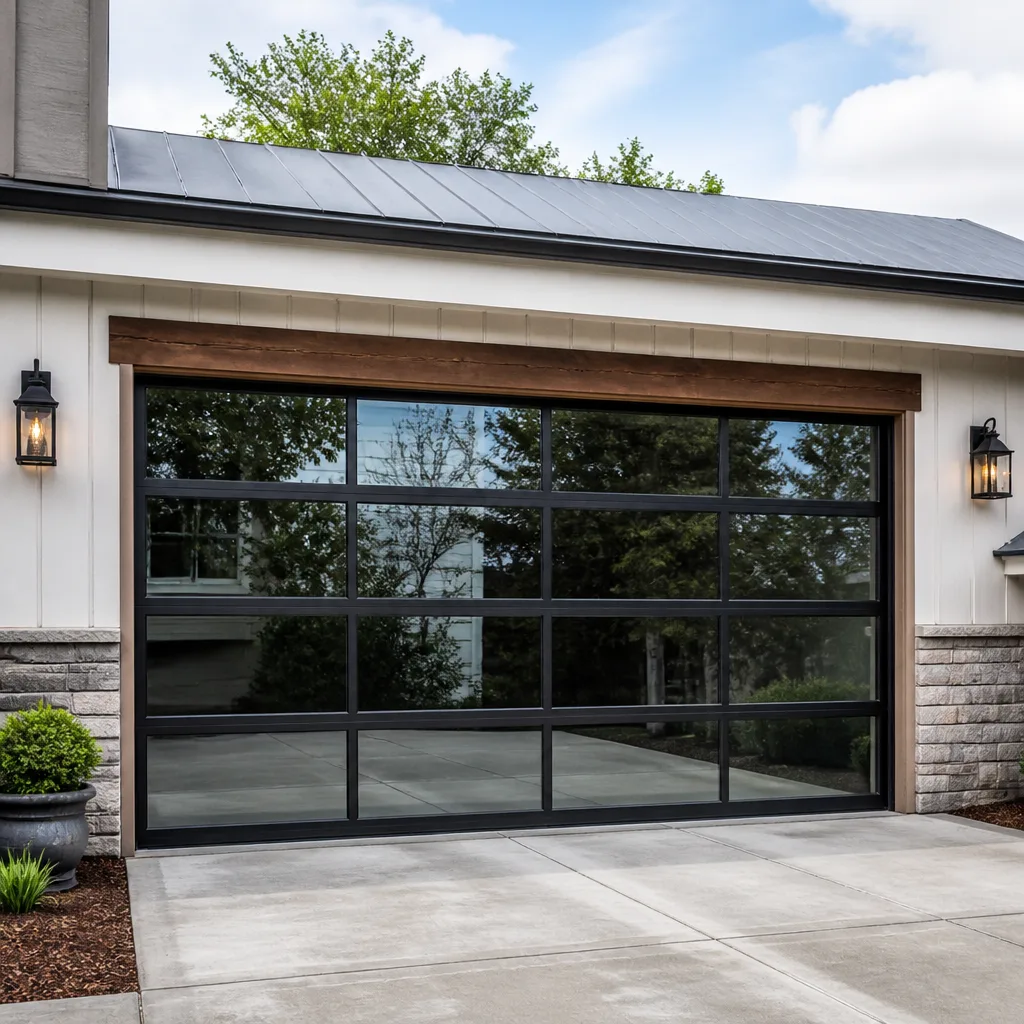 Full-view glass
 LiftMaster openers
 Chamberlain openers
Full 25-point door and opener safety check with every visit - springs, cables, rollers, tracks, and your LiftMaster or Chamberlain opener included
You get a price before we start. It does not change when the pro arrives.
Get your free estimateGarage Door Repair Maintenance Checklist for Taunton Homeowners
The number one maintenance mistake Taunton homeowners make is lubricating their tracks. That’s the one place you’re not supposed to put lubricant. Grease on a track collects grit, grit grinds against the rollers, and a door that was quiet in October starts shrieking by February. The right lubrication hits six other points and skips the tracks entirely. This guide is built around the failure modes we actually see on Taunton doors: what to check, what to leave alone, which lubricant belongs on which part, and how to read the early warning signs before a spring lets go. You’ll get a task-by-task schedule broken into monthly, seasonal, and annual intervals, so you’re not guessing what to do when.
Quick Answer
A useful garage door maintenance checklist for Taunton should cover five things: a balance test to catch weakening springs, a visual inspection of cables and rollers, targeted lubrication of hinges, rollers, and the torsion shaft (never the tracks), a weather-seal and bottom-bracket check, and an annual safety-reverse test on the opener. Do the light checks monthly, the lubrication and hardware tightening seasonally, and the full spring and cable inspection once a year before winter. Anything involving torsion springs, cables, or the opener’s electrical connections belongs to a trained technician.
Styles & brands we work with
- Raised-panel steel
- Carriage house
- Modern flush
- Full-view glass
- LiftMaster openers
- Chamberlain openers
Table of Contents
- Why Taunton Doors Need Their Own Checklist
- The Lubrication Map: What Gets Which Product
- The 10-Second Balance Test
- Spotting Cable Fraying Nobody Notices
- Road Salt, Winter Spray, and the Bottom Bracket
- Your Month-by-Month, Seasonal, and Annual Schedule
- The Safety-Reverse Test and Opener Checks
- Winterizing a Taunton Door Before the First Freeze
Why Taunton Doors Need Their Own Checklist
Taunton sits far enough inland that it doesn’t carry the salt-air corrosion problem of the coast, but it makes up for that with road salt. Every winter, plow trucks spread treated salt on the streets and driveways around Taunton, and that spray coats the lower third of your garage door. The parts it reaches first are the bottom bracket, the bottom roller, and the hinges closest to the ground. Those are exactly the components that hold the door square under cable tension, so corrosion there isn’t cosmetic.
The other factor is temperature swing. A Taunton winter can drop well below freezing and come back above it within a week, several times over. Metal expands and contracts with each swing, and the gaps where hinges and rollers sit loosen incrementally. That’s why a door that sat perfectly aligned in September can ride loud and crooked by January. The cycle affects every brand the same way – a Craftsman door and a Raynor door loosen on the same schedule.
Where brand familiarity matters is diagnosis. The failure that pulls a LiftMaster opener off its limit switch shows up differently than a Chamberlain unit losing its travel setting, and the fix is not interchangeable. We work on the brand you have, which is why this checklist names parts and components rather than generic “moving parts.”
One more local detail: Taunton’s older housing stock includes many garages with heavy wood-frame doors and legacy openers. Those doors carry more weight per spring than a modern insulated steel panel, and the spring tension needed to balance them climbs accordingly. Every balance test in this guide assumes heavy is normal here.
The Lubrication Map: What Gets Which Product
Most checklists say “lubricate moving parts” and leave it there. That’s the problem. Different components need different lubricants, and using the wrong one shortens the life of the part. Here’s the map we use on Taunton doors.
White lithium grease
Use it where metal grinds on metal under load: the hinges at each pivot point, the torsion shaft bearings on the center plate, and any exposed drum bearing. In sub-freezing temperatures, a lithium grease with a lower base-oil viscosity stays workable better than a heavy general-purpose grease, which stiffens and drags the door. Ask at the counter for a low-temperature white lithium grease, not the thickest tub on the shelf.
Silicone spray
Use it on rollers, the roller stems inside the hinges, and the door’s weather seals. Silicone stays flexible at low temperatures and doesn’t gum up with grit. Avoid anything containing petroleum distillates on the rubber bottom seal and the vinyl perimeter strips, because it hardens them over time and the seal cracks by spring.
Nothing at all
This is the list people forget:
- Tracks. Never lubricate them. Grease traps grit, and grit wears rollers.
- Torsion springs. Wipe them down if you like, but don’t pack them with grease. The coil needs to compress freely.
- Cables. Never lubricate. A cable is inspected, not lubricated – a greased cable hides fraying under the grease.
- The opener rail’s carriage channel. A dry silicone or a dry PTFE spray is the exception here; never grease.
How to apply what you do use: one light coat, wiped on with a rag or sprayed in short bursts. Excess lubricant is worse than none, because it attracts grit just like grease on a track does. If you’re ever unsure which product is going on which part, call (833) 495-0837 – we answer 24/7 – or bring the question to a professional garage door service and let us handle the lubrication as part of a tune-up.
The 10-Second Balance Test
The balance test tells you whether your springs are losing tension before they fail. A torsion or extension spring that has weakened 10 or 20 percent shows up in the balance test long before it snaps. The test itself takes ten seconds:
- Disengage the opener. Pull the manual release cord so the door runs free on the spring, not the motor.
- Lift the door by hand until it’s about halfway up. Move slowly and give it a moment.
- Let go at the halfway point. A properly balanced door stays put, maybe drifting a few inches on its own.
- Watch what happens. If it slides down on its own, your springs are losing tension. If it creeps up, the tension is too high.
- Reengage the opener. Pull the cord until the carriage clicks back onto the screw or belt.
Run the balance test once a month. A door that starts drifting downward by an inch at a time is your early warning. The danger here is what you do next. A weakened spring near failure can snap mid-test, and a torsion spring under load is stored energy that will injure anyone standing near it.
Safety note: once the test tells you the tension is off, stop. Adjusting spring tension yourself, on either torsion or extension springs, is the most dangerous task in this trade. The springs and cables carry enough force to break bones. Call a professional for adjustment or replacement. If you have a door with a broken spring right now, don’t run the opener at all – the motor will fight the door’s weight and burn out the carriage or strip the screw, and the door may come down on whatever is under it. That’s a job for dedicated garage door spring repair, not a generalist.
One note on pricing when you call: in the Taunton market, spring replacement typically runs $180 to $340 for a single spring, and a matched pair is usually replaced together, so you’d expect roughly double for a pair. The written estimate you get before any work starts sets the final price.
Spotting Cable Fraying Nobody Notices
Most homeowners walk past cable fraying every day and never recognize it. The cables run from the bottom bracket on each side up to the drums at the top of the door. They’re the parts that hold the door if the spring fails – they’re the backup. When they start to go, they’re quietly corroding under the paint or the grease you shouldn’t have used.
Here’s what to look for, in order of severity:
- The canary’s breath. Frayed inner strands sticking out like a bird’s nest, usually an inch or two above the drum. Any fraying at all means the cable is compromised.
- Bird-caging or kinking. A uniform cable should be straight; kinked means it’s already stretched past its useful life.
- Rust and rough spots where the cable disappears into the drum. Rust pit spots weaken a cable before it breaks.
- Loose tension under the roller stem. With the door closed, a cable that sags or looks slack on either side needs inspection.
Check the cables once a month as part of your walk-around. You don’t need to touch them; a visual check from a few feet back is enough. When the fraying is visible, don’t cycle the door. Cables under tension that snap can whip, and the risk isn’t only to the door. If you see it, call us for garage door repair. We treat cable failure as an emergency because a door riding on a single cable can come off its track or drop unevenly.
Road Salt, Winter Spray, and the Bottom Bracket
Taunton gets a real dose of winter road treatment, and the salt spray from plows and driveways is the most underrated cause of garage door corrosion in the area. It’s not about proximity to the ocean – it’s about what coats your driveway every January. The spray kicks up onto the lower door and stays there, wet, until it dries. That’s a running bath of salt in solution.
The parts this hits hardest are:
- The bottom bracket where the cable attaches. This is a load-bearing part; corrosion on it is a structural concern, not cosmetic.
- The lowest hinges on each side. They carry the heaviest panel and sit closest to the splash zone.
- The bottom roller stems. They’re often stamped steel rather than plated; they rust and seize.
- The threshold and the seal’s retaining channel.
What to do about it: rinse the lower third of the door with plain water after a big salting, or whenever you wash the car in winter. A light wipe-down of the bottom bracket and lower hinges with a damp cloth, followed by a dry pass, makes a real difference. On steel doors from Clopay or Amarr, the factory paint finish is part of the corrosion protection – if you see rust bubbling through the paint, it’s already eaten through and the part needs attention. Don’t scrub rust off a load-bearing bottom bracket and assume it’s fine; let a technician look at it.
Older doors in Taunton, especially on garages that face the street and take direct plow spray, show this pattern the worst. Ask yourself when you last looked at the bottom bracket. Most people haven’t looked at it at all, and it’s the single most corrosion-vulnerable load point on the door.
Your Month-by-Month, Seasonal, and Annual Schedule
An undifferentiated checklist is easy to ignore. This schedule splits the work so you’re never doing much at any one time. If you keep to it, you’ll catch the vast majority of failures before they turn into a broken door.
Monthly (10 minutes)
- Run the 10-second balance test.
- Walk the cables with your eyes and look for fraying or kinks.
- Look at the door from outside with it fully closed; does the bottom seal sit flat and even?
- Listen while the door runs. New noises are information – a squeak, a chatter, or a banging is telling you something.
- Wipe off any salt residue visible on the bottom bracket and lowest hinges.
Seasonal (20-30 minutes, do these four times a year)
- Lubricate hinges, roller stems, and the torsion shaft bearing with white lithium grease; rollers and seals with silicone.
- Tighten the hinge bolts and roller brackets – they loosen seasonally on every brand.
- Clear debris from the track channels, then wipe the tracks clean. No lubricant.
- Run the safety-reverse test on the opener (see the next section).
- Check that the door is level when closed; if one side sits lower, note it and mention it when you call.
Annual (before winter)
- Full inspection of springs, cables, drums, and bottom brackets. That’s the job for a trained eye.
- Have a garage door specialist test spring tension and confirm the door is properly balanced after the seasonal adjustments.
- Re-verify the safety-reverse and force settings on your LiftMaster or Chamberlain / myQ opener against the manufacturer’s setting.
- Look for any rust bubbling under paint on load-bearing parts.
If your door was installed with a legacy Raynor or Craftsman opener and has never been checked beyond an occasional squirt of grease, the annual inspection is the one that matters. We work through this entire schedule on Taunton doors and can do the annual in one visit, including an opener tune-up. For motor and sensor issues specifically, see our garage door opener repair page.
The Safety-Reverse Test and Opener Checks
The safety-reverse test confirms the door reverses when it meets an obstruction. It’s the single most important opener check there is, and it’s the one most people have never run. A door that closes on a child or a pet without reversing is a serious hazard, and the fix may be as simple as re-setting a limit or as involved as a sensor alignment.
- Close the door fully, then open it a few feet so you have space below.
- Lay a 2×4 flat on the ground under the middle of the door. A board, not a person – never test with a person or pet in the path.
- Press the close button and let the door travel down onto the board.
- Watch for the reversal. The door should stop and reverse immediately on contact.
- Test the sensor. Wave your leg through the beam at the bottom of the door while it’s closing – the door should reverse. If it doesn’t, the sensors may be misaligned or dirty.
- Repeat monthly. Any failure means stop using the opener and have it looked at.
On smart openers like LiftMaster’s myQ line or Chamberlain units, the limit and force settings can drift over time, which causes false reversals or, worse, no reversal at all. If the door reverses and then re-opens all the way, or stops a foot short, that’s usually an opener travel setting rather than the door itself. Our technicians work through the opener brands installed most often – LiftMaster, Chamberlain, Genie, Craftman, and the rest – and can put the settings right.
Safety note: if you ever need to work inside the opener housing or the wall control wiring, that’s electrical work. We don’t recommend opening an opener motor for anything beyond the manufacturer’s reset procedure. Have a trained technician handle anything inside the casing.
Winterizing a Taunton Door Before the First Freeze
Winter arrives in Taunton with cold snaps that can drop from mild to well below freezing within a day. A door that’s going to fail over hardware does it on the first hard freeze. Winterizing is mostly about anticipation, and it’s simple if you do it in autumn.
- Do the full lubrication pass in October, before the cold stiffens a heavy grease. Use a low-temperature white lithium on the hinges and bearing and silicone on the rollers and seals, so they don’t bind in the cold.
- Check the bottom seal. A cracked or torn seal lets air and snow in, and any water that gets behind it freezes against the door’s track. Replace a failing seal before winter, not in January.
- Test the safety-reverse. Cold weather stiffens door motion; if the force setting was already borderline, cold makes it worse. Have the opener’s limits checked.
- Look at the springs. Cold makes early spring fatigue show. If a balance test drifted during the fall, don’t wait until a spring snaps in the cold.
- Clean out the tracks and inspect the rollers. A roller that’s stiff in the heat will seize in the cold.
The bigger point: a spring under load is more likely to fail on the coldest day because the metal gets more brittle and the door’s weight moves less freely on stiff hardware. That’s the failure we see most in Taunton in January. If you’ve got a door that’s sluggish in the cold, call us and we’ll test the balance and springs before it turns into an emergency – a broken spring is exactly what our Taunton Garage Door Repair Pros team handles, and we answer 24/7.
Common Mistakes to Avoid
- Lubricating the tracks. The top mistake. Grease plus grit equals grinding rollers; keep the tracks clean and dry.
- Taking a DIY look at the torsion springs. Winding or adjusting a torsion spring yourself is the single most dangerous thing a homeowner can do to a garage door. The energy stored in one spring is enough to cause serious injury. This is the job for a professional, every time.
- Ignoring the salt spray. Taunton’s winter road treatment quietly eats the bottom bracket and lower hinges; people ignore the bottom bracket until the cable pulls free.
- Greasing the cables. A greased cable can’t be inspected properly and hides the damage under a layer of grease.
- Skipping the safety-reverse test. The single most important safety check on the door, and the one most people have never run.
- Running a door with a broken spring. It burns out the opener and can drop the door; don’t cycle it, call for emergency service.
- Assuming your brand is generic. A Chamberlain, a LiftMaster, and a Genie each need specific settings; the wrong fix for a modern opener overwrites the travel limits.
See the difference
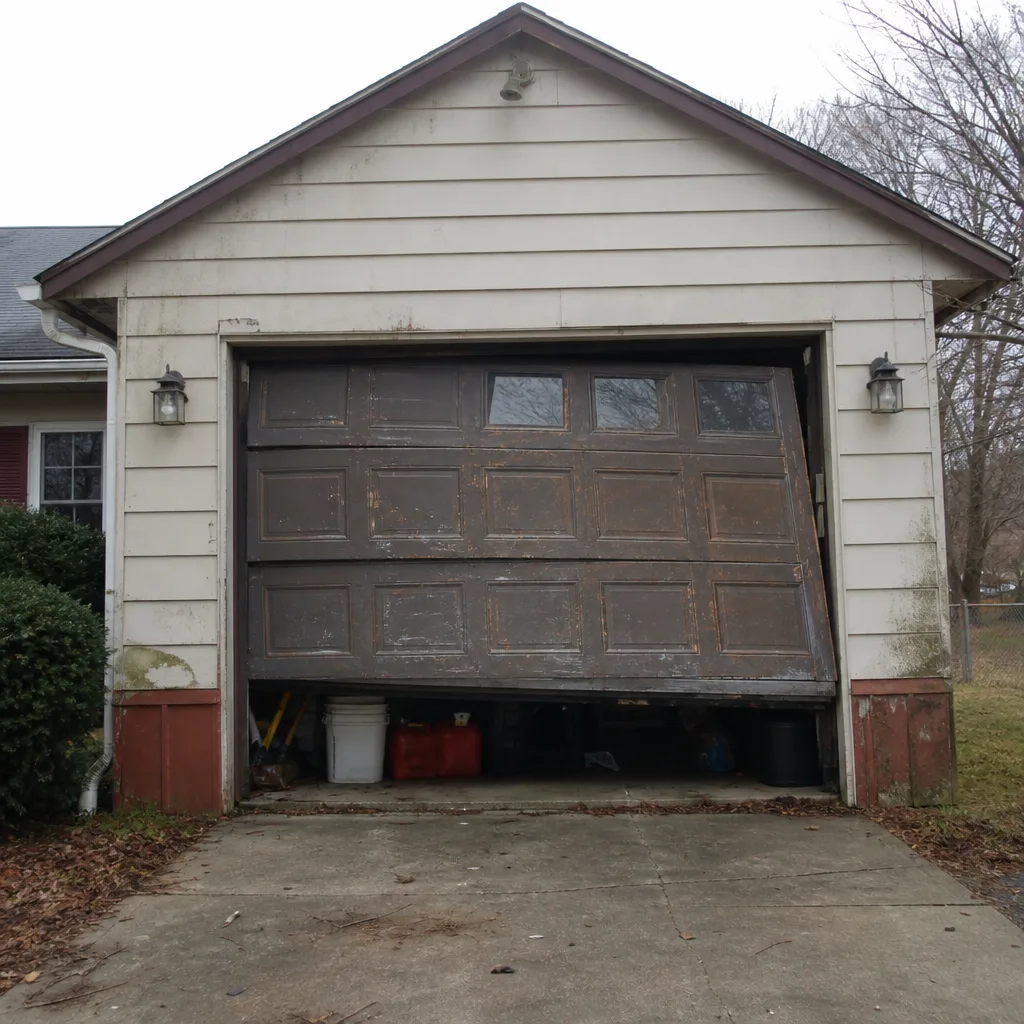 Before
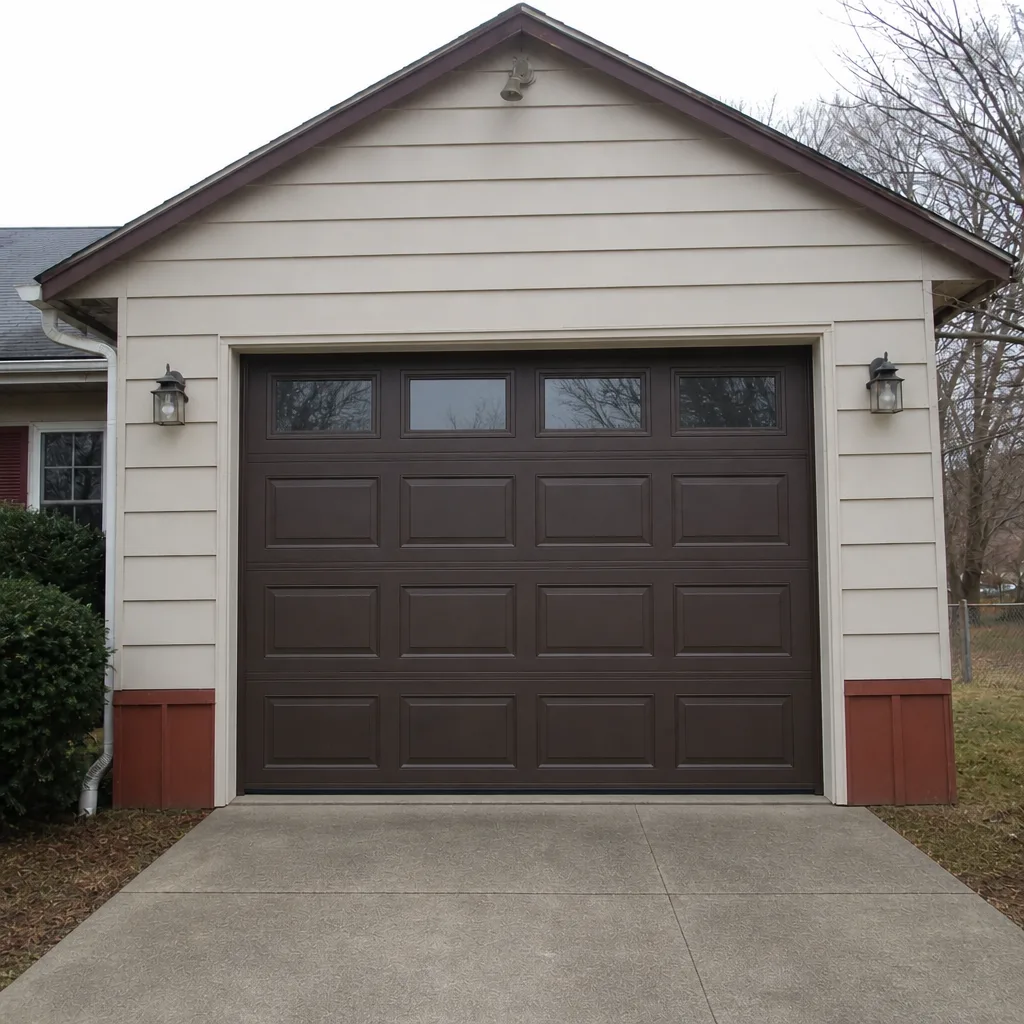 After
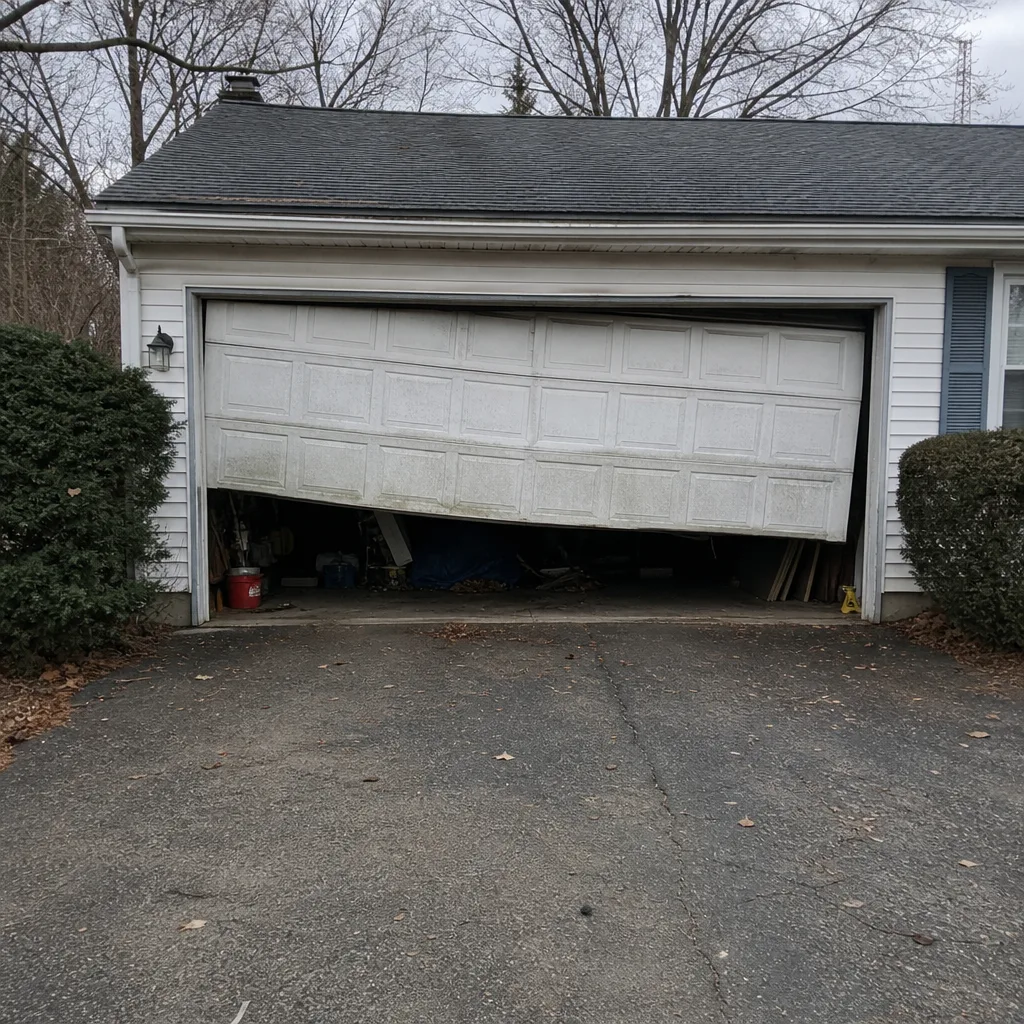 Before
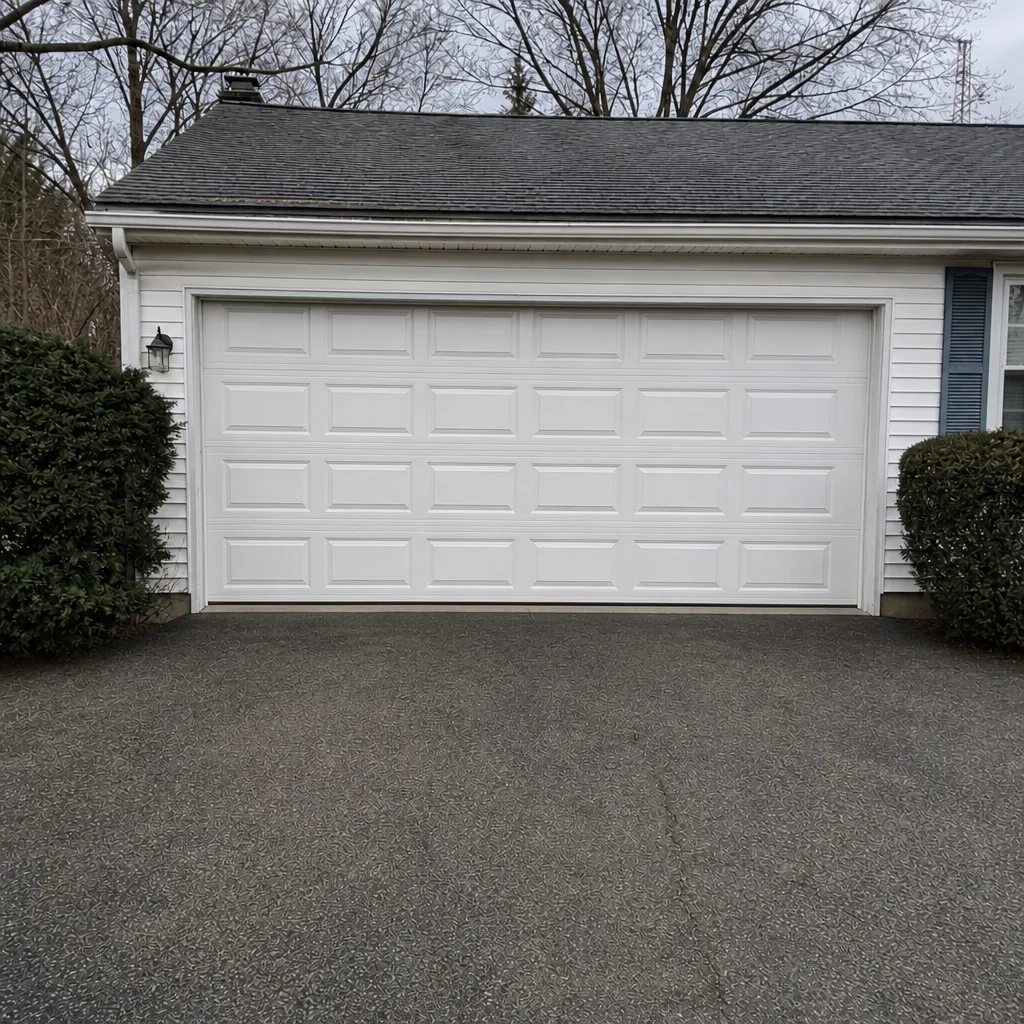 After
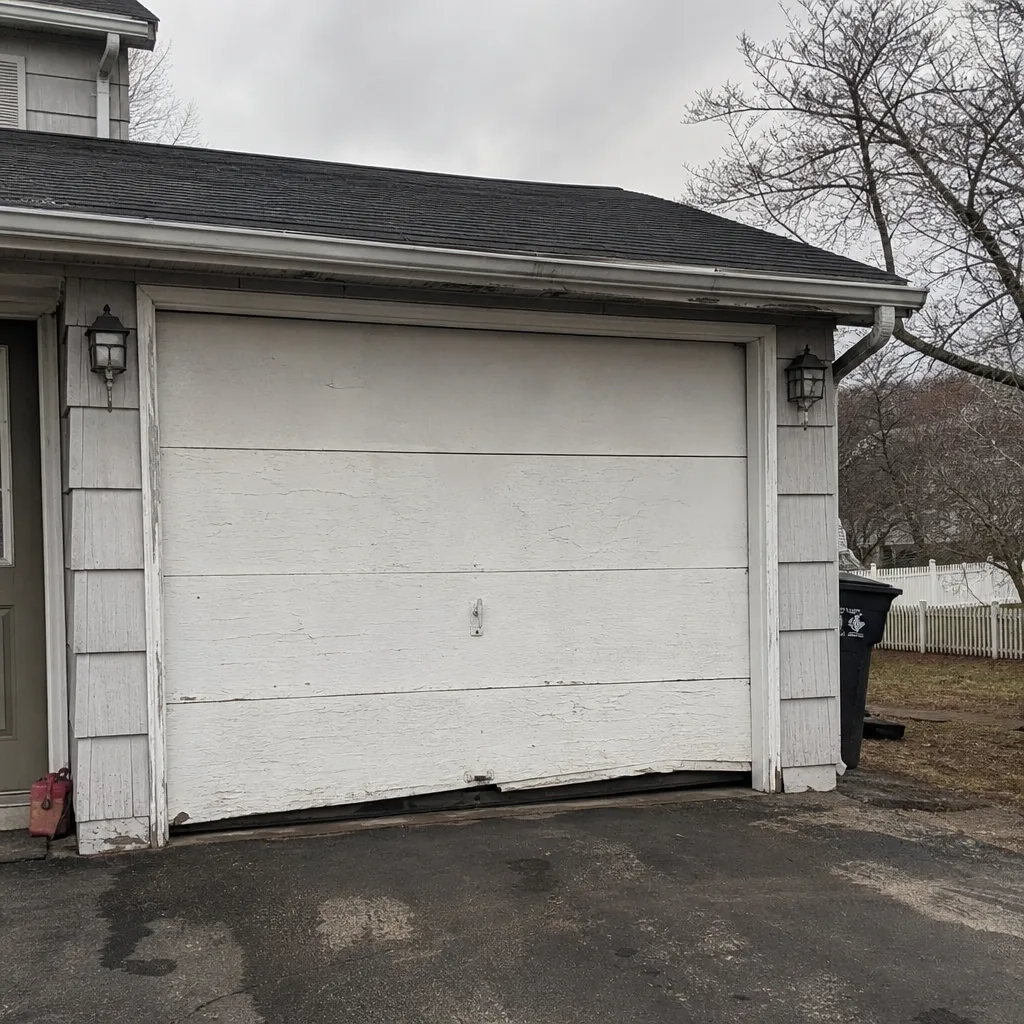 Before
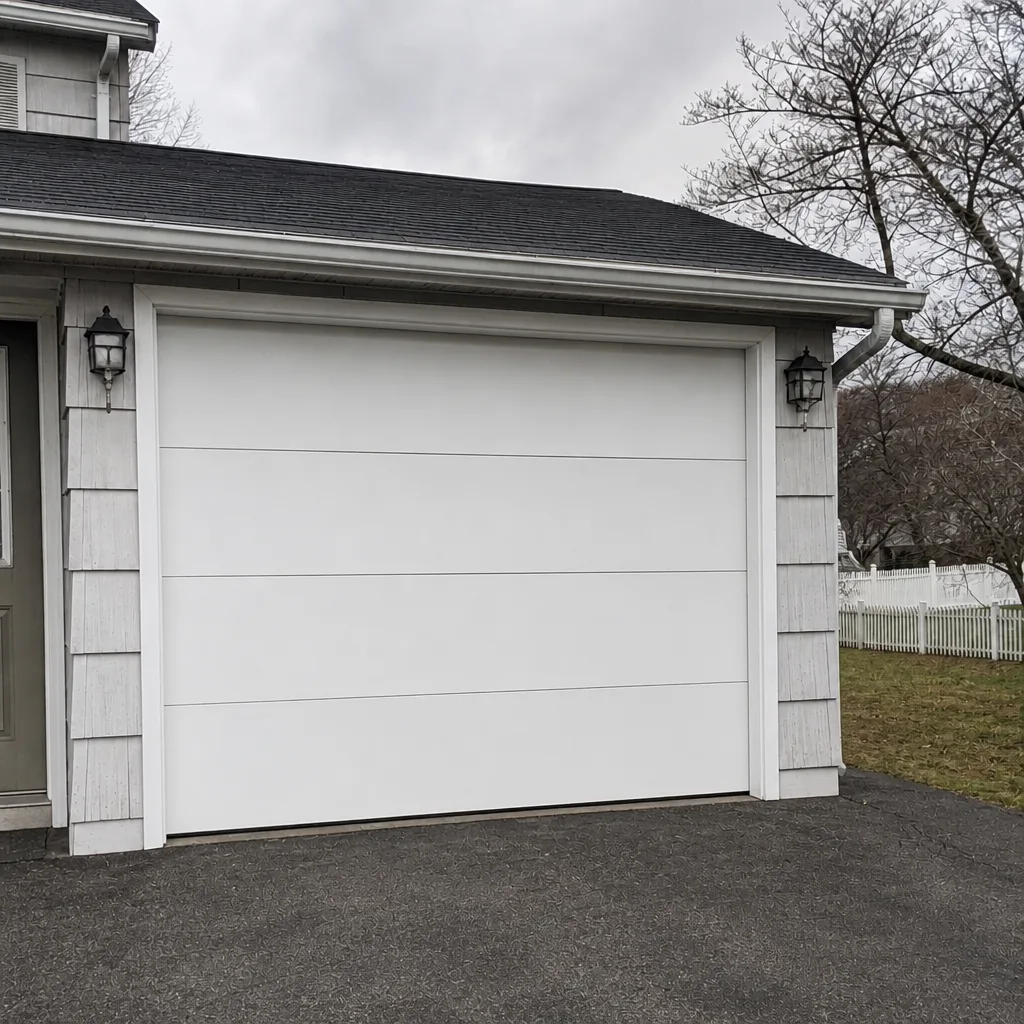 After
When to Call a Professional
Call a professional when the balance test shows your door drifting downward, when you see any cable fraying, when the door won’t close or reverse properly, when you hear a bang from the springs, or when the door is off its track or hanging unevenly. Anything involving torsion springs, cables, or the opener’s wiring is a technician’s job, not a homeowner’s, and a broken spring can make the door drop unexpectedly. A damaged spring also affects door balance, which can put dangerous strain on the opener if you keep running it. We handle spring work as a dedicated specialty because it’s the highest-risk repair on the door.
Taunton Garage Door Repair Pros offers free estimates in Taunton – call (833) 495-0837. We answer 24/7. Fast dispatch from 7am to 7pm, Sunday through Friday. Every price is quoted and agreed before any work starts.
Frequently Asked Questions
A tactile check of the balance and cables monthly, a lubrication and tightening pass every season, and a full professional inspection once a year before winter. The monthly checks take ten minutes and catch most problems early.
No. Tracks should stay clean and dry; lubricant traps grit and wears the rollers. Lubrication belongs on the hinges, roller stems, torsion shaft bearing, and door seals, in the right products. Call (833) 495-0837 for a free estimate on a tune-up.
In the Taunton market, spring replacement typically runs $180 to $340 for one spring. A matched pair is usually replaced together, so expect roughly double for a pair. The written estimate sets the price. Call (833) 495-0837 for an exact quote – estimates are free.
Run the balance test: disengage the opener and lift the door halfway. If it drifts down on its own, the springs are losing tension. Never adjust spring tension yourself – call a technician. Call (833) 495-0837 to book an inspection.
Yes, road salt from winter plow spray hits the bottom bracket, lowest hinges, and roller stems hardest. Rinse the lower door periodically in winter and have the bottom bracket inspected annually.
Yes for urgent failures like a snapped spring, cable, or door off its track. Call (833) 495-0837 and we can dispatch a technician – we answer 24/7, with fast dispatch from 7am to 7pm, Sunday through Friday. The price is set before any work begins.
The Bottom Line
Garage door maintenance comes down to a small number of checks done on a sensible schedule. Run the 10-second balance test monthly, inspect the cables every time, lubricate the right parts with the right products and keep the tracks dry, rinse the winter road salt off the bottom bracket, and test the safety-reverse every season. The parts you can’t safely handle – torsion springs and cables – go to a specialist. If you’d rather not run the checklist yourself, we’ll do it: for Taunton homeowners and property managers, one visit can cover the full annual inspection, an opener tune-up, and a written estimate for anything that needs replacing. Call (833) 495-0837 for a free estimate. We answer 24/7, with fast dispatch from 7am to 7pm, Sunday through Friday.
Written by the team at Taunton Garage Door Repair Pros.