
Last updated November 22, 2026
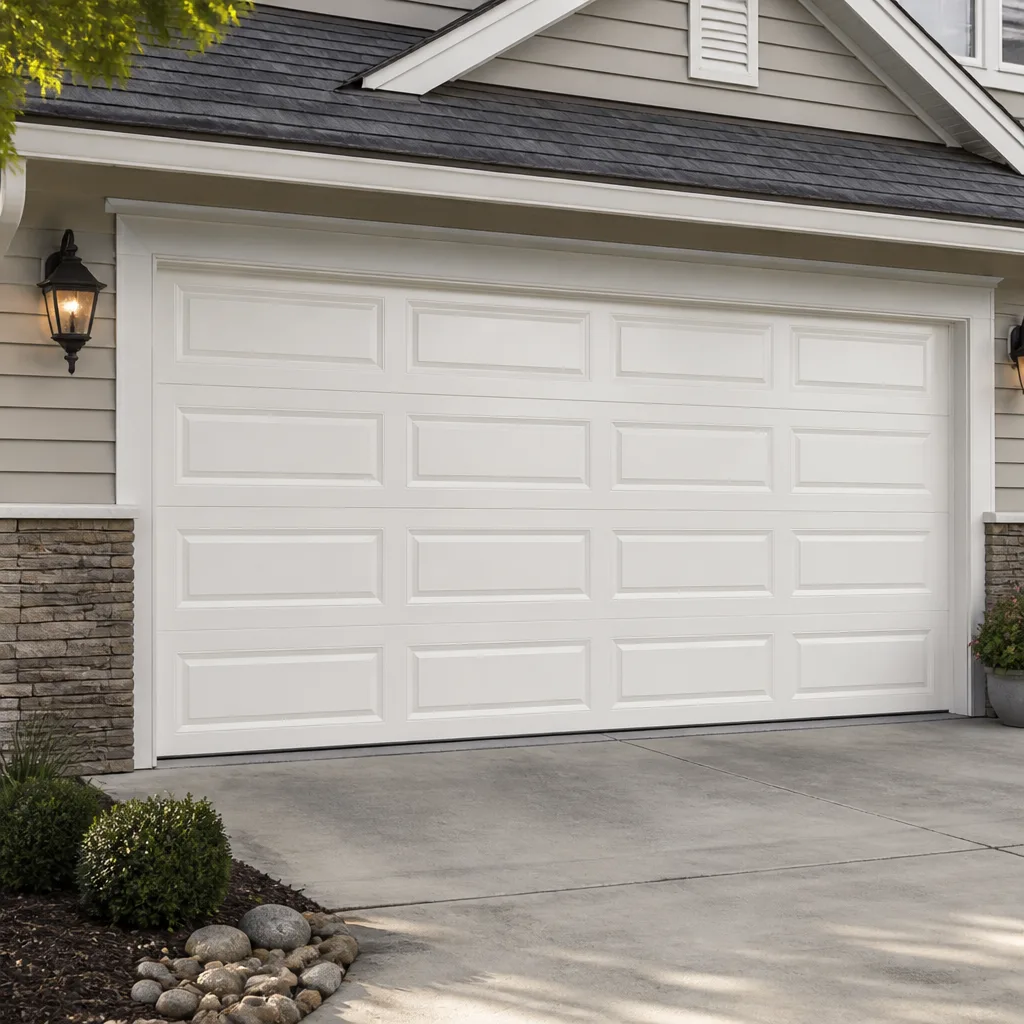 Raised-panel steel
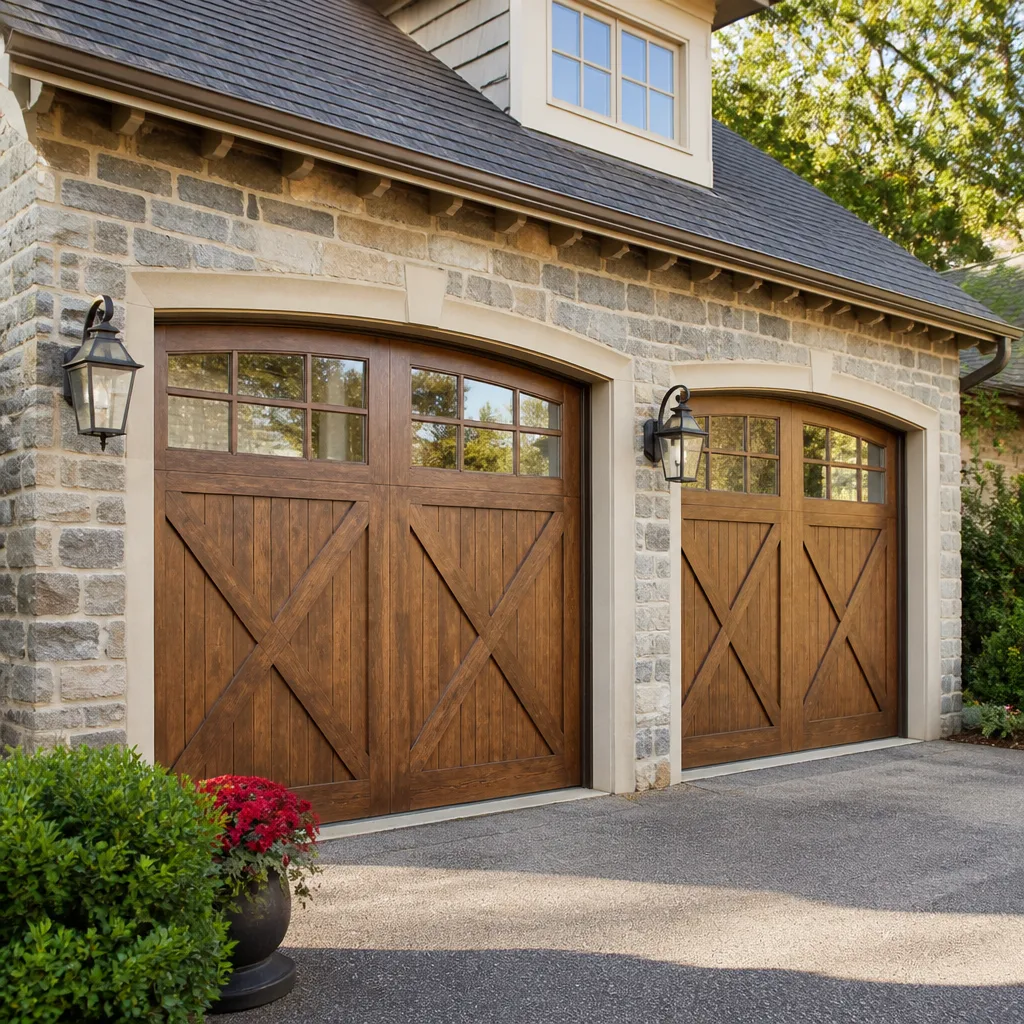 Carriage house
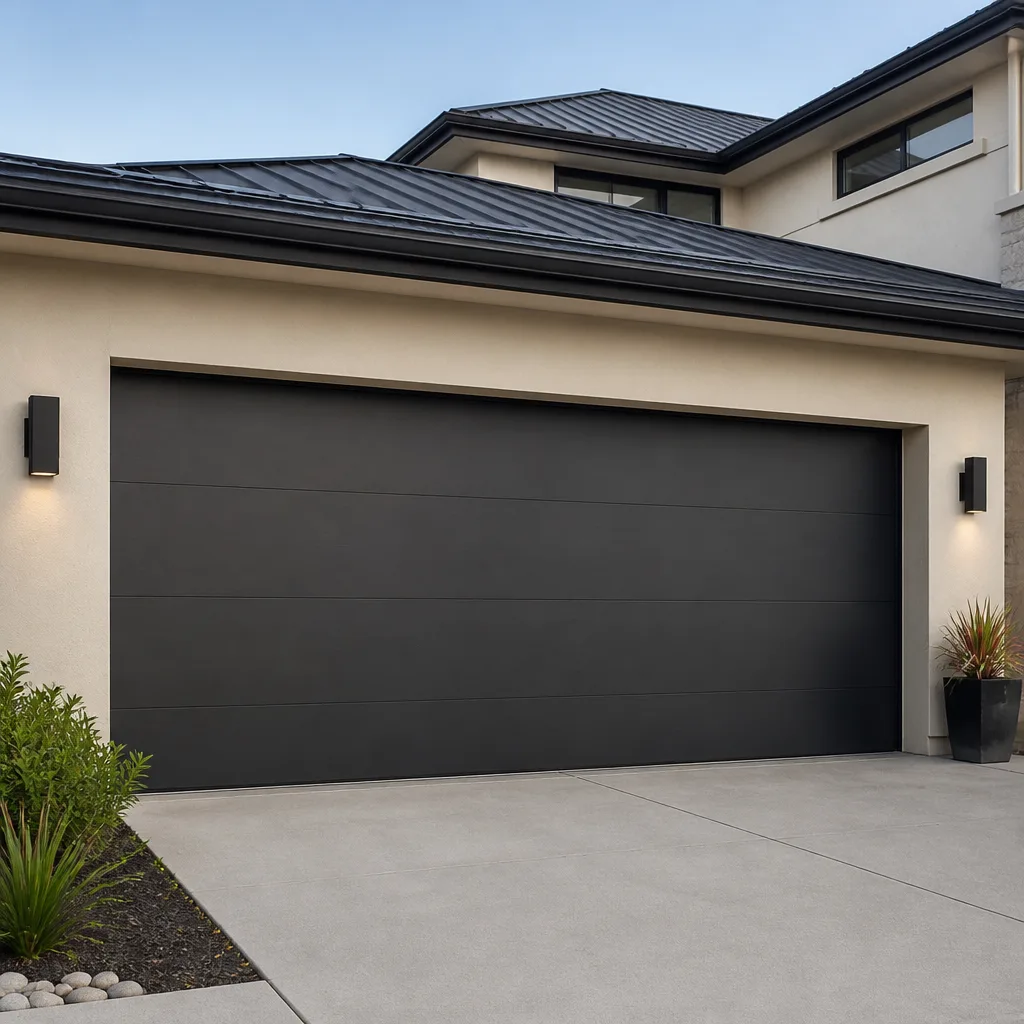 Modern flush
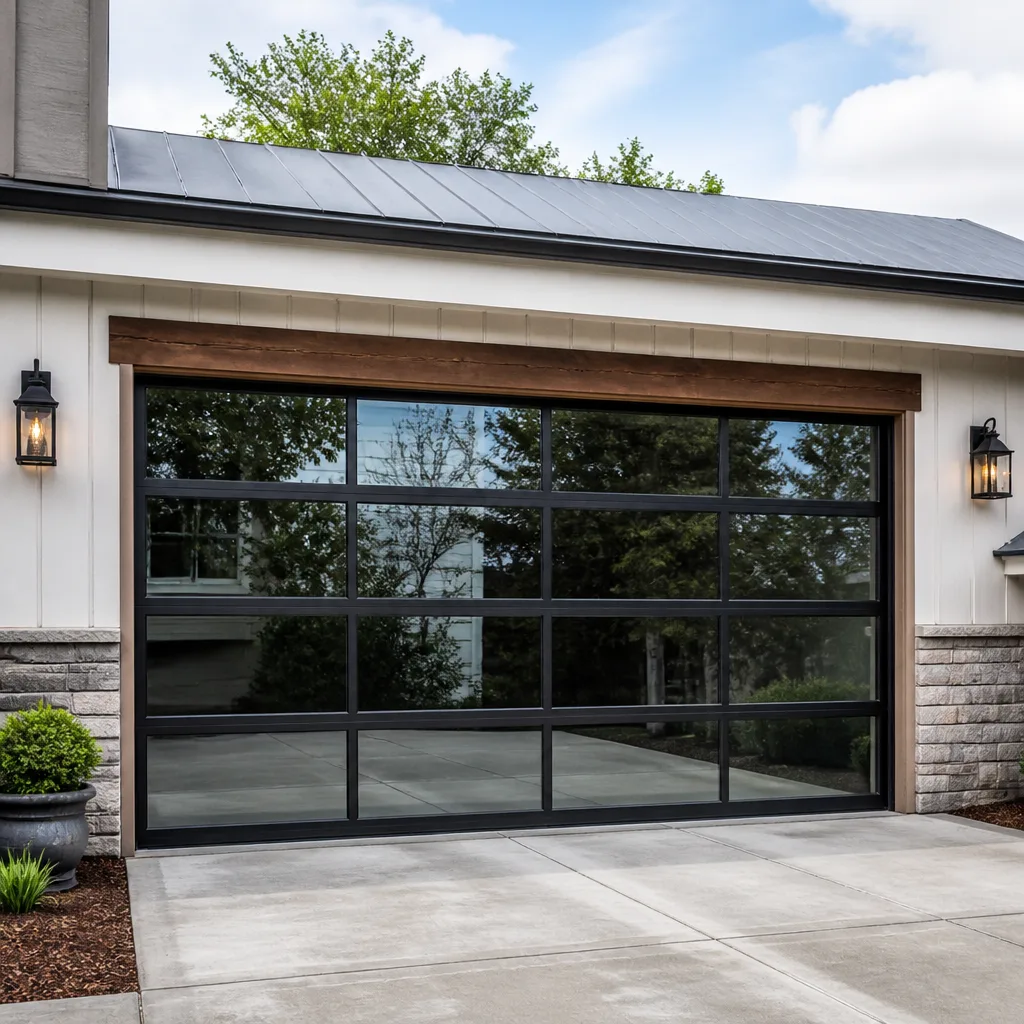 Full-view glass
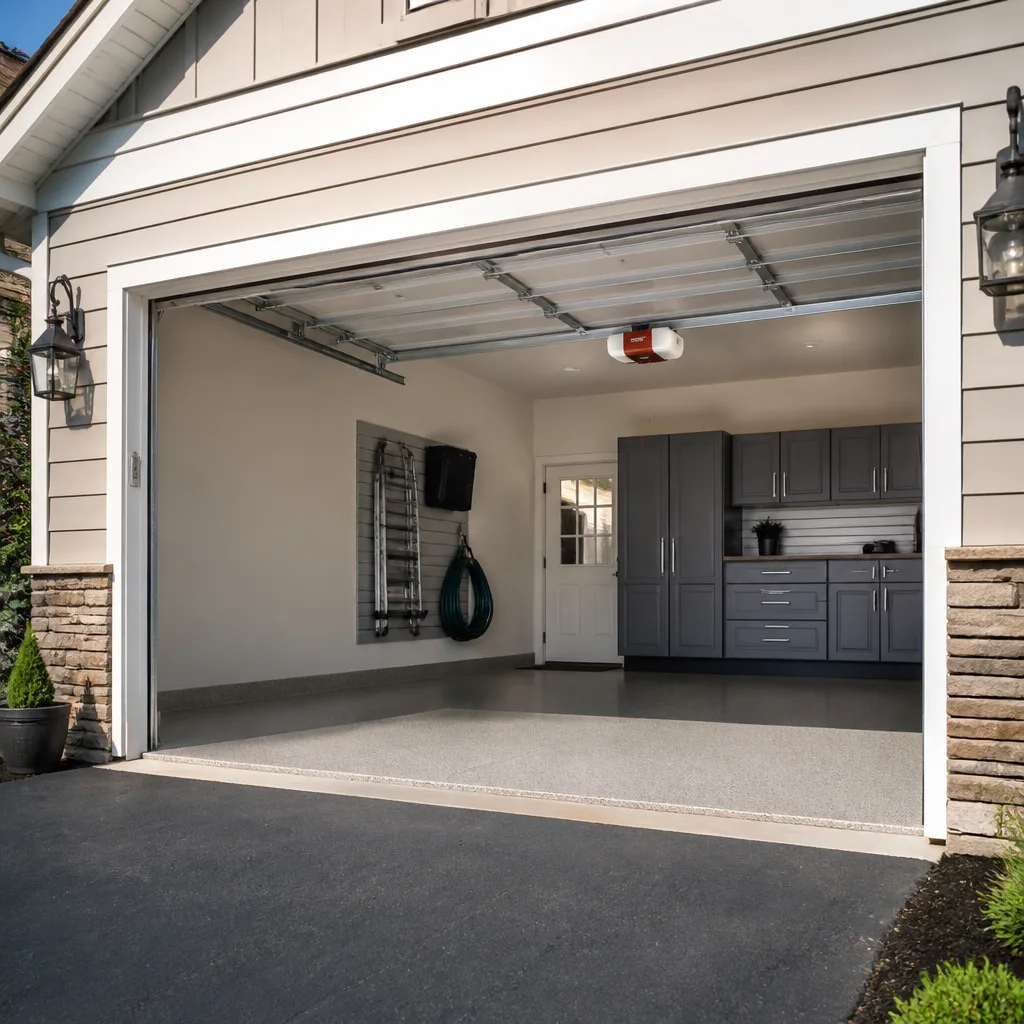 LiftMaster openers
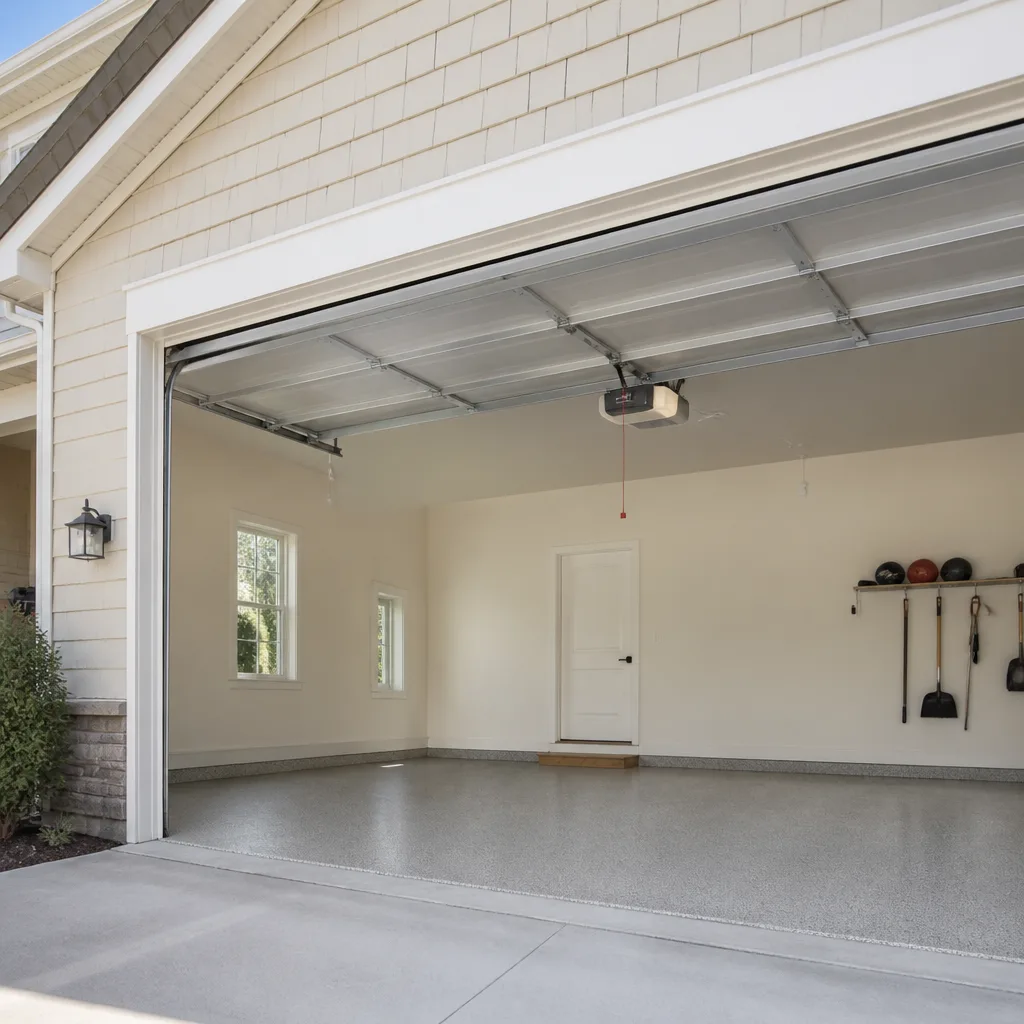 Chamberlain openers
Full 25-point door and opener safety check with every visit - springs, cables, rollers, tracks, and your LiftMaster or Chamberlain opener included
You get a price before we start. It does not change when the pro arrives.
Get your free estimateThe Complete Guide to Garage Doors in Taunton
A broken spring isn’t a spring problem. It’s a system event. The moment that torsion spring lets go, the full weight of the door drops onto the opener’s gears, the cables, and the drums all at once. The opener strains. A cable may jump. A drum can bind. Most garage door guides tell you to replace the spring and move on, which is how a small failure turns into a second repair six months later. In this guide, we treat the garage door as one integrated mechanical system, because that’s how it behaves. You’ll learn how a Taunton winter stresses each component, how the parts depend on one another, what the brand on your door tells you, and how to read your door’s sounds and movement as early warning signals before anything breaks at all.
Quick Answer
A garage door is a balanced mechanical system, not a collection of separate parts. The springs carry the door’s weight, the opener only guides it, the tracks keep it aligned, and the cables and drums transfer tension safely. When one part fails or drifts out of adjustment, the others absorb the strain. In Taunton, the freeze-thaw cycle, road salt tracked onto the garage floor, and heavy seasonal use make bottom seals, cables, and spring coil gaps the first things to wear. Fixing the system, not just the broken part, is what keeps a door working.
Styles & brands we work with
- Raised-panel steel
- Carriage house
- Modern flush
- Full-view glass
- LiftMaster openers
- Chamberlain openers
Table of Contents
- How a Garage Door Actually Works as a System
- How Taunton’s Freeze-Thaw Cycle Wears Your Door Down
- The Spring, Opener, and Track Relationship
- What Brands Are Common in Taunton Homes
- Reading Your Door’s Behavior Before It Fails
- Repair vs. Replace: Reading the End-of-Life Signals
- A Seasonal Check List for Taunton Homeowners
- Safety: What You Should Never Touch Yourself
How a Garage Door Actually Works as a System
A sectional garage door is a balancing act. The door itself can weigh several hundred pounds, and the springs are what make it feel like fifteen. Torsion springs mounted on a shaft above the door store energy as they wind, then release it as the door closes, so the opener never has to lift the full weight. Extension springs, found on some older doors, do the same job along the horizontal tracks. Either way, the principle holds: the springs carry the load, the opener supplies a light assist, and the tracks and rollers keep everything moving in a straight line.
Every part depends on the next:
- Springs counterbalance the door’s weight and set how much effort the opener needs.
- Cables and drums connect the springs to the bottom corners of the door and convert spring tension into lift.
- Rollers and hinges let the panels pivot as the door travels around the curved track.
- Tracks define the path and keep the panels aligned with each other.
- The opener pushes and pulls the door along that path, but it isn’t designed to carry the door’s weight.
- Safety sensors and the reversing mechanism stop the door if something blocks its path.
When someone tells us a door “just started acting up,” the symptom is almost never in the part the homeowner suspects. A door that reverses halfway up is often a track that’s out of plumb. A door that slams down is a spring that’s lost tension. A door that grinds is a roller that’s seized. This is why diagnosing the whole system matters. A proper garage door repair starts with checking balance, alignment, and tension together, not swapping the part that made the noise and leaving the rest to fail later.
How Taunton’s Freeze-Thaw Cycle Wears Your Door Down
Taunton sits in a climate that gives its garage doors a specific kind of wear. Winters here swing between freezing nights and mild, wet days, sometimes within twenty-four hours. That freeze-thaw cycle is hard on a garage door in ways a warmer climate never sees.
Bottom seals take the worst of it. The rubber or vinyl astragal along the bottom of the door flexes every time the door closes. In freezing weather, it hardens. When the door comes down on a frozen threshold or a ridge of ice, the seal can crack or split, and once it does, cold air and moisture get under the door. A failing bottom seal also lets in road salt and meltwater that pool on the garage floor and splash up onto the steel bottom section. Over a few winters, that’s how rust starts along the bottom edge.
Cables stretch and pop. Steel cables contract in cold weather and relax as temperatures climb. Repeated cycling between tight and slack works the cable ends and the drum grooves. A cable that’s slightly out of adjustment will keep drifting and can eventually jump its drum, and a jumped cable is a safety issue, not just an inconvenience.
Torsion springs develop coil gaps. The tight coil wind on a torsion spring is under constant load. Cold contraction and warm expansion, repeated season after season, can open small gaps between coils and stress the metal at the point where the spring is most loaded. That’s part of why springs fail more often on the first genuinely cold mornings of the season than in the middle of July. Humid summers add the other half of the equation, working on the joints and hinges with moisture.
None of this means a Taunton door will fail every winter. It means you should look at the bottom seal, the cable ends, and the spring coils every fall, before the first long freeze, so a small wear point doesn’t become a bigger repair.
The Spring, Opener, and Track Relationship
Here’s the part most homeowners miss: the spring, the opener, and the tracks are a team. If you change one without checking the other two, the fix is fragile.
Springs set the load the opener sees. A correctly balanced door should stay put when you lift it halfway and let go. If it drops, the springs are weak, and the opener is lifting more than it should. If it rises on its own, the springs are over-tensioned, and the opener is fighting them on the way down. Either way, the motor is working outside its design range, and gears, capacitors, and drive components wear faster.
The opener is rated for a balanced door. A 1/2-horsepower opener and a 3/4-horsepower opener both assume the springs are doing their job. When the springs are tired, a stronger opener doesn’t solve the problem; it just masks the symptom and forces the motor harder. That’s why we check spring balance whenever we look at an opener that’s straining, and why we check the opener whenever we replace a spring.
The tracks have to stay parallel. Track alignment keeps the panels even as the door travels. A bent track, a loose bracket, or a floor that’s settled can pull the door slightly off line, and an off-line door drags on the rollers and loads the opener. On an older Taunton home with a garage slab that’s heaved or cracked, the vertical tracks may be out of square with the door, and no amount of opener adjustment will fix that.
Our technicians have up to 12 years of experience, and the single most common thing we correct on a return visit is a previous repair done in isolation. A new spring with a misaligned track still fails early. Our approach is to inspect the system as a whole, so the garage door spring repair you pay for holds up the way it should.
What Brands Are Common in Taunton Homes
The door and opener on your house has a make. Knowing it matters, because parts, tension specs, and adjustment procedures differ by brand. We work on the brand you have, and we’re factory-familiar with eight of the most widely installed lines: LiftMaster, Chamberlain, Genie, Clopay, Amarr, Wayne Dalton, Craftsman, and Raynor.
What we typically see in Taunton is a mix of older and newer systems:
- LiftMaster and Chamberlain openers show up on most newer homes and on retrofits. These are the modern connected platforms, and homeowners increasingly ask about smart-home features through the myQ app. When an opener that used to work on a phone suddenly doesn’t, the issue is often the logic board or the wifi module, not the motor.
- Genie openers are common on older installs and on doors that were updated in stages. Screw-drive and belt-drive Genie models have their own adjustment quirks, and knowing them saves guesswork.
- Clopay and Wayne Dalton doors are everywhere on residential Taunton properties. Clopay panels, hinges, and bottom seals are widely available, which keeps repairs quick. Wayne Dalton’s older doors sometimes use design-specific hardware, so identifying the model first is essential.
- Raynor doors turn up in this area as well, often on larger two-car garages. Raynor hardware and spring specs are specific enough that a generic substitute isn’t the right call.
If you don’t know your brand, look at the sticker inside the opener housing and the label near the bottom panel or on the end stile of the door. Bring that information when you call, and it shortens the diagnostic. The same company that handles garage door opener repair can supply and install a full new door, so there’s no referral runaround when a repair stops being the sensible option.
Reading Your Door’s Behavior Before It Fails
Your garage door tells you what’s wrong before it breaks. The trick is knowing which sound or movement points to which part. Here’s how to read the signals:
- A sharp bang, then a door that won’t lift. That’s almost always a broken torsion spring. Stop using the opener. Lifting a door with a broken spring puts the opener and cables under load they aren’t meant to carry.
- Grinding or scraping as the door travels. Usually a seized roller, a dry hinge, or a track that’s out of alignment. Left alone, friction loads the opener and accelerates wear.
- A door that reverses halfway up or stops short. Often a misaligned track or a safety sensor that’s out of line, not a motor problem.
- A door that slams down or feels heavy lifting. A sign of weak or unbalanced springs. The opener is doing more than its share of the work.
- Uneven movement, one side rising before the other. A cable that’s slack or jumped a drum, or a track that’s been knocked out of plumb. This is a stop-and-call symptom.
- A rattle or squeal from the opener head. Worn gears, a failing capacitor, or a drive belt that’s stretched. These typically worsen over time rather than fail suddenly.
- Slow or inconsistent speed. A tired motor, a binding door, or a spring that’s lost tension.
The faster you identify the signal, the smaller the repair. A seized roller caught early is a small fix; the same roller allowed to drag for months can wear the hinge and the track with it. If you’re unsure what a sound means, describe it when you call and we can tell you whether it’s safe to keep using the door in the meantime. Because your garage door is a security system as much as a convenience, a door that won’t close properly is worth fixing quickly.
Repair vs. Replace: Reading the End-of-Life Signals
Not every failing door needs replacing, and not every repair is worth doing. The honest line is usually about whether the system as a whole is still sound. A single bad spring on an otherwise healthy door is a straightforward repair. A door with cracked panels, worn hinges, a tired opener, and a track that’s been knocked around is a different calculation.
Consider repair when:
- The door panels are structurally sound and the sections aren’t rusted through.
- The opener is functioning correctly, or the fault is isolated to one component.
- The tracks are straight and the rollers and hinges are in reasonable condition.
- The repair is one or two parts, not a cascade.
Consider replacement when:
- The bottom section is rusted through or the panels are visibly cracked or separated.
- The springs, cables, rollers, and opener are all at the end of their life at roughly the same time, so the repairs would add up fast.
- The door has been repeatedly repaired and never balances properly.
- You want a quieter, better-sealed, or insulated door for a space you use regularly.
Replacement is a measured, ordered, scheduled job, not a same-day fix. The smart move is to get a free measure and a written price before deciding, so you can compare the cost of a repair to the cost of a new door. Our garage door installation service covers the full process, and the same team that repaired your opener can supply the new door, so you get one consistent plan. When the estimate is written and agreed before any work starts, you know what you’re buying.
A Seasonal Check List for Taunton Homeowners
You don’t need to service your own door to keep it healthy. Most of the value comes from a visual check and knowing when to call. Here’s a practical routine for a Taunton home:
- In late fall, look at the bottom seal. Run a hand along the bottom edge with the door closed. Any crack, split, or gap means cold air and moisture are getting in, and it’s worth addressing before the freeze.
- Check the spring coils. Look at the torsion spring above the door for visible gaps between coils or signs of rust. Don’t touch the spring itself, just observe.
- Test the balance. With the door closed and the opener disengaged, lift the door halfway and let go. A balanced door stays put. If it drops or rises, the springs need a professional.
- Check the cable ends. Look at the cables along the sides for fraying kinks or slack. A slack cable is a warning sign.
- Listen and watch. Run the door and listen for grinding or scraping, and watch for uneven movement or hesitation.
- Wipe down the tracks. A dry cloth along the inside of the track removes grit. Don’t lubricate the track itself; the rollers need the lubrication, not the track surface.
- Clear the safety sensors. Wipe the lenses and make sure nothing blocks the beam across the opening.
That check takes about fifteen minutes. Anything that looks off is worth a professional look, since a small adjustment in fall often prevents a large repair in January.
Safety: What You Should Never Touch Yourself
Garage door springs and cables are the most dangerous parts of the system, and this is where a real specialist earns their place. A torsion spring is under extreme tension even when the door is closed, and releasing that tension without the right winding bars and technique can cause serious injury. The same is true of the cables and drums, which store tension as well. This isn’t a component to experiment with. Adjusting it is a job for a trained technician, full stop.
Never try to:
- Loosen, adjust, or remove a torsion spring on your own.
- Cut or disconnect a cable under tension.
- Adjust the opener’s force settings to make a struggling door move; that only masks a balance problem and adds risk.
- Disable the safety reversing system to make a door close.
The same caution applies to any electrical work on an opener’s wiring or on the outlet it’s plugged into. If an opener trips a breaker or the wiring looks damaged, call a professional rather than opening the housing. When it comes to the spring and the controller, the safe habit is to observe, not to intervene. Our safety-critical work is the core of what we do; a properly done spring repair is not a generalist job.
Common Mistakes to Avoid
- Replacing a spring without checking the opener. A new spring changes the load the opener sees, and if the opener was straining before, it may need attention too. Skipping that check is how a good repair gets undone.
- Using a stronger opener to fix a heavy door. A bigger motor doesn’t fix weak springs, it just forces the door harder. The right answer is to rebalance the door, not add horsepower.
- Turning up the force setting on the opener. If the door is binding, raising the force setting lets it push through, hiding a track or roller problem while adding wear and risk.
- Ignoring a failing bottom seal through the winter. In Taunton, that gap lets in cold air, meltwater, and road salt, which are exactly the things that rust out the bottom section.
- Patching one panel and stopping there. Cracked panels often signal a track or alignment problem, and if the cause isn’t found, the next panel may crack too.
- Choosing a generalist for spring work. Spring repair requires specific tools and training, and not every handyman will do it. Ask before you book.
- Skipping the written estimate. A clear, written price before work starts protects you from a surprise when the invoice arrives. Any repair worth doing is worth a quote in writing first.
See the difference
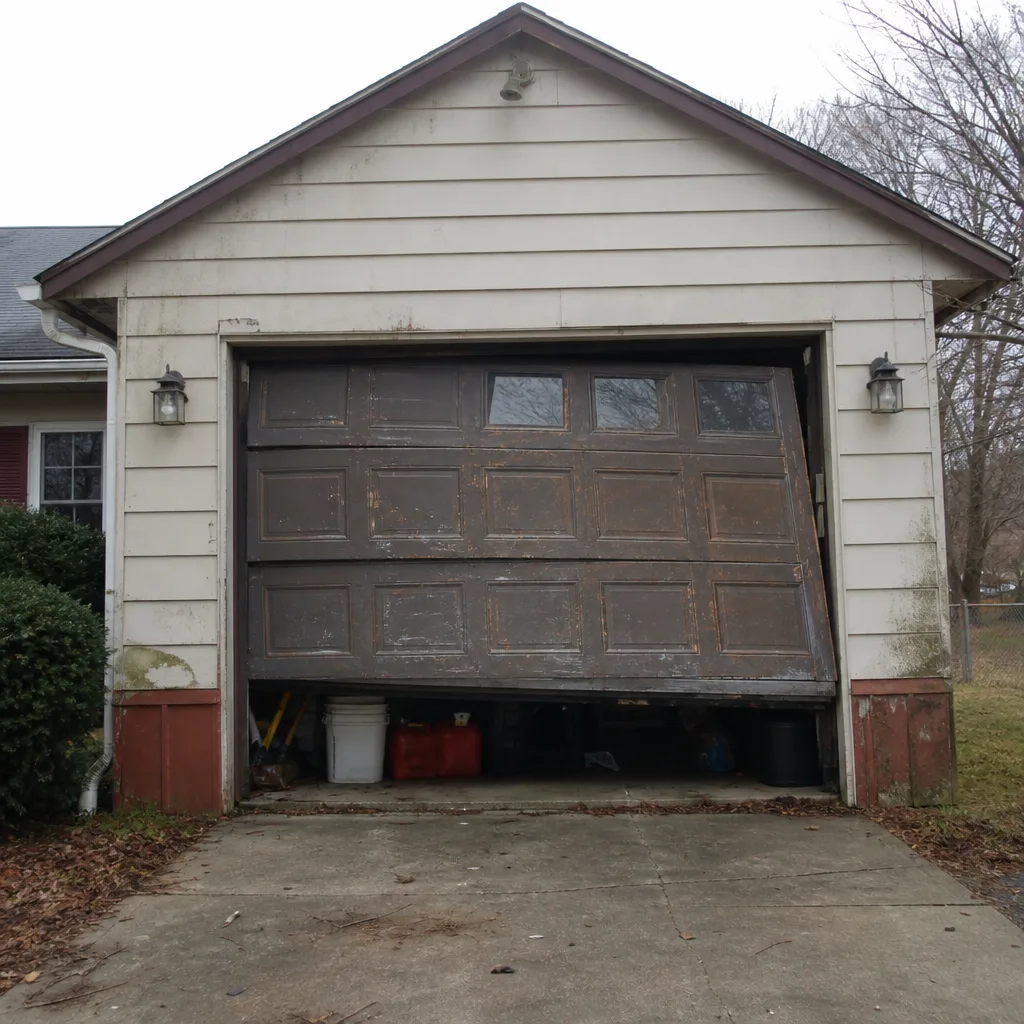 Before
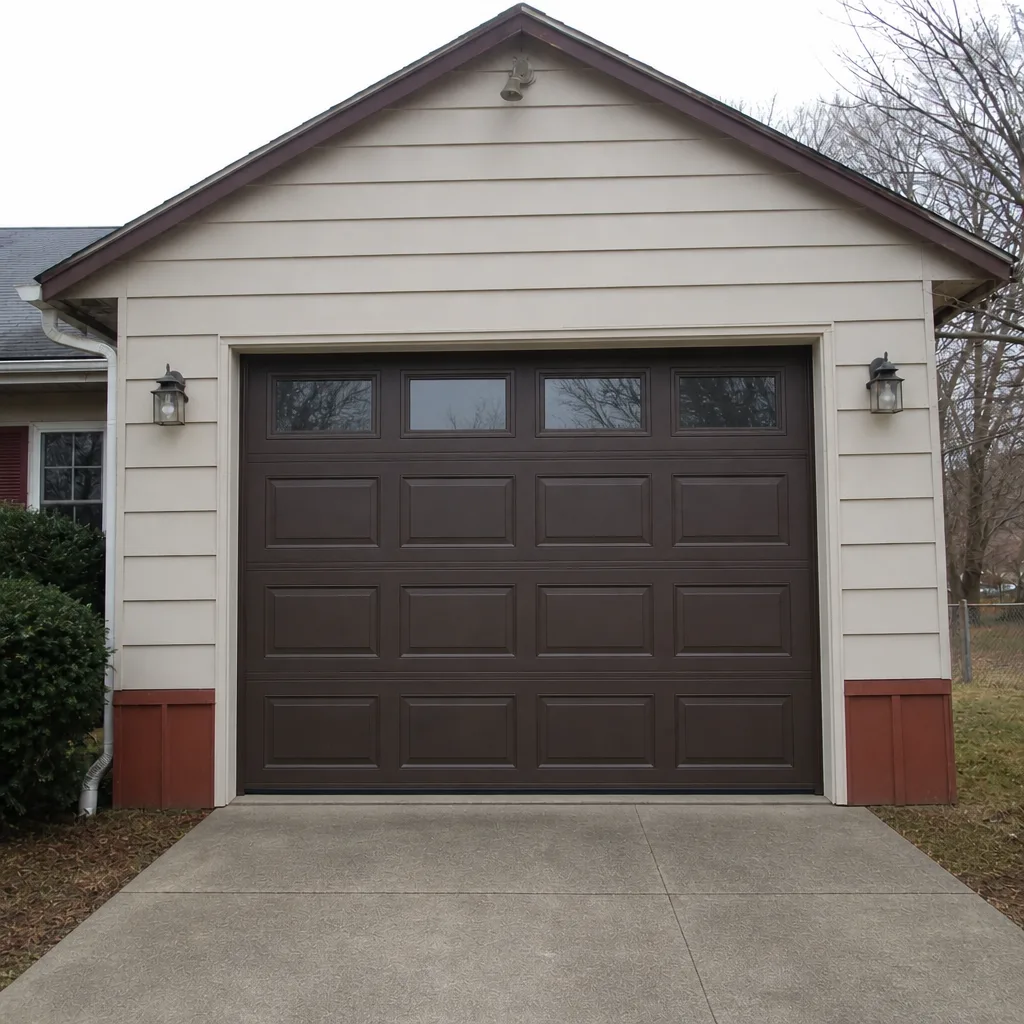 After
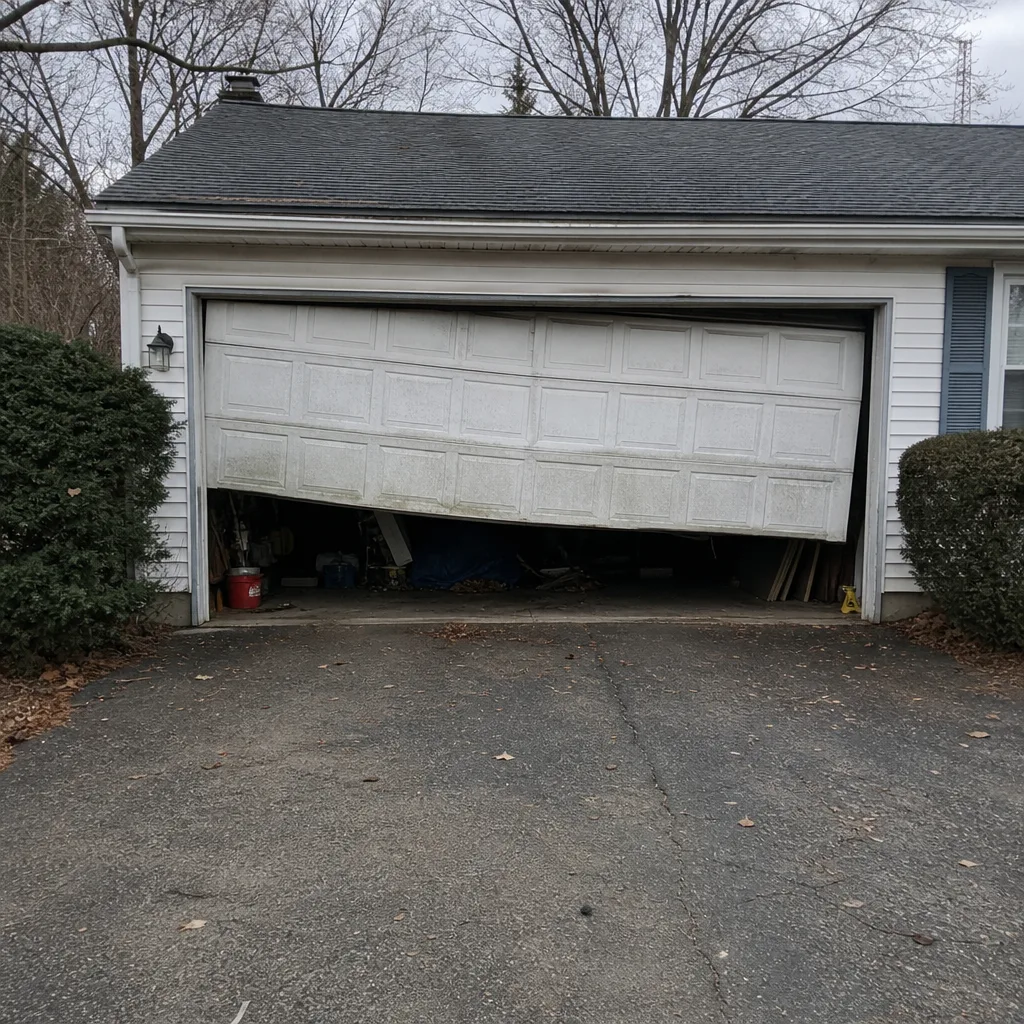 Before
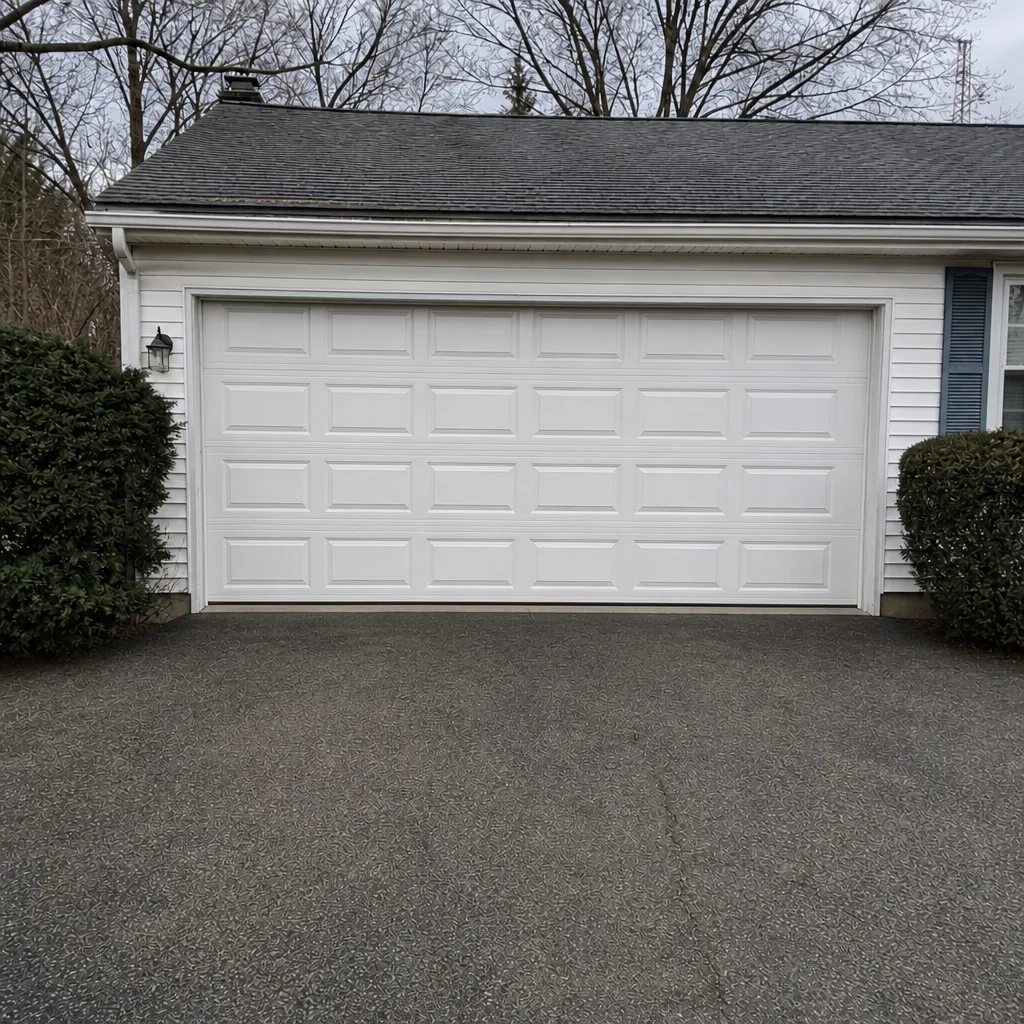 After
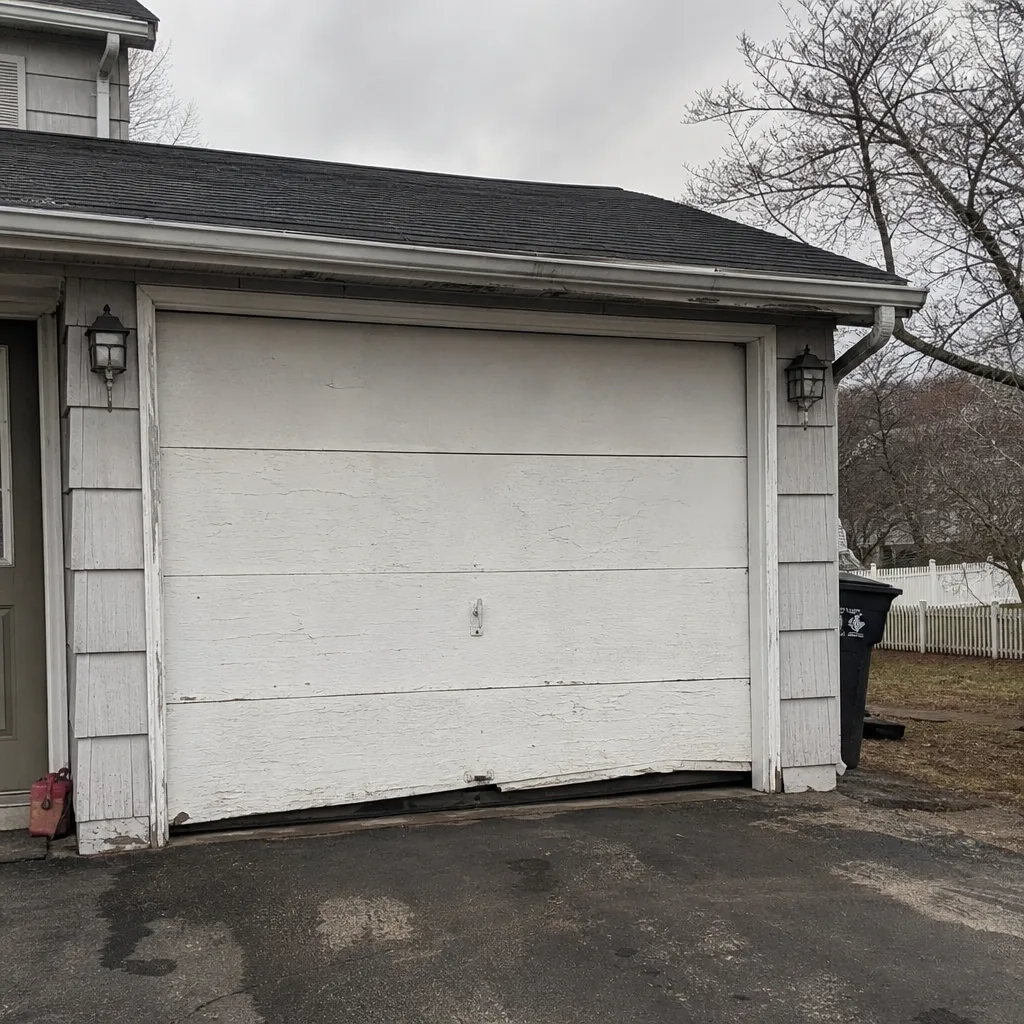 Before
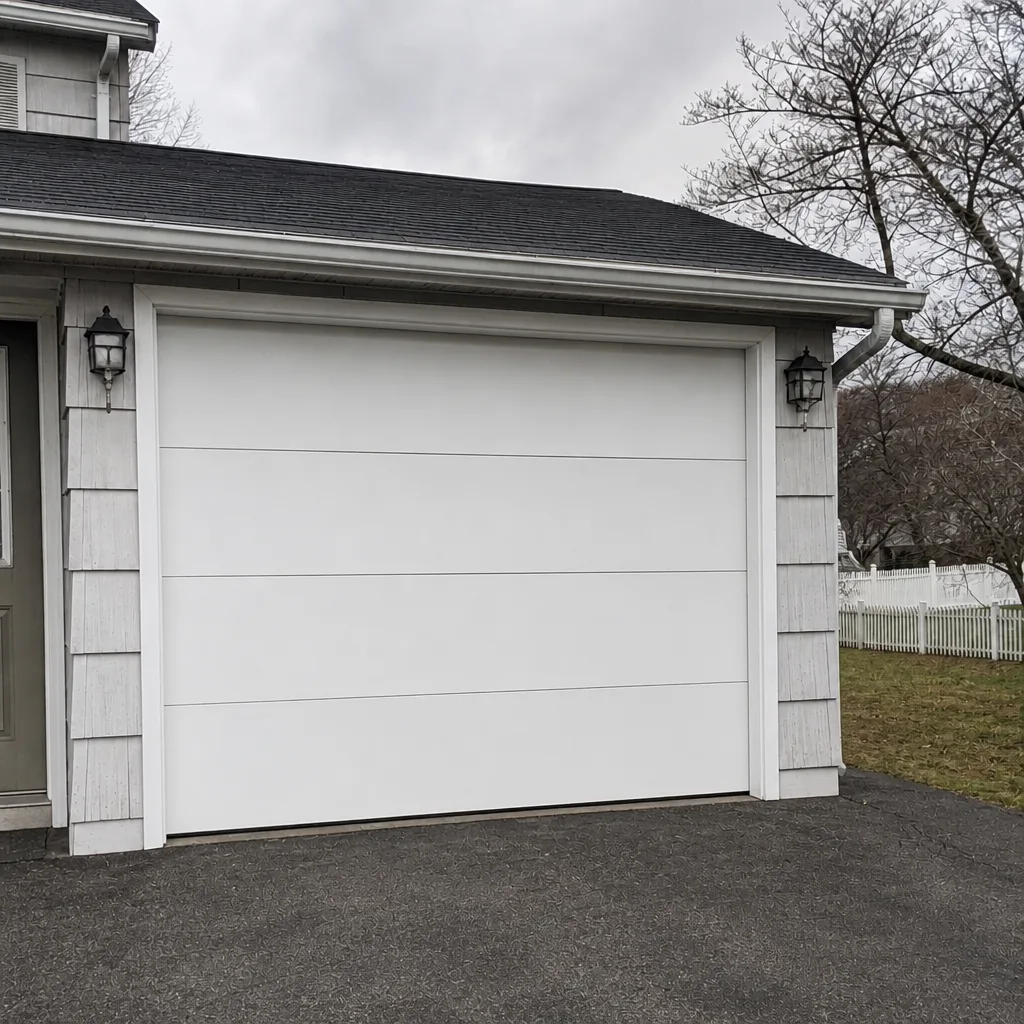 After
When to Call a Professional
Call a specialist when the door has stopped lifting, when a spring has visibly snapped, when a cable is slack or jumped, or when the door travels unevenly. Call when the opener runs but the door doesn’t move, or when a grinding or screeching sound has started to get worse. If the door is stuck open on a night you’d rather it were closed, or you’re going out of town and the door won’t secure, that’s an urgent call. We answer 24/7, so a call about a door that’s left your home exposed gets booked in. Taunton Garage Door Repair Pros offers free estimates in Taunton, and the price is set in writing before any work begins. Call (833) 495-0837 for the next opening, Sunday through Friday, 7am to 7pm.
Frequently Asked Questions
Spring repair is typically quoted per spring, and most doors use a matched pair that’s replaced together, so plan on roughly twice a single-spring estimate. We give a written, itemized estimate before any work begins, and the written price is what sets the final cost. For an exact figure, call (833) 495-0837; estimates are free.
Yes, we offer same-day service for urgent failures like a snapped spring or a door stuck open. We answer 24/7, and a call outside dispatch hours is booked into the next opening. Call (833) 495-0837.
No. We inspect the system, then quote in writing before any work starts, and the written estimate sets the price. If the inspection turns up something that changes the plan, we talk it through with you before touching the door. Call (833) 495-0837 for an exact quote.
Most likely, yes. We work on the brand you have across eight lines, including LiftMaster, Chamberlain, Genie, Clopay, Amarr, Wayne Dalton, Craftsman, and Raynor. Knowing your brand speeds up the repair, so look at the opener label and the door panel sticker before you call.
The freeze-thaw cycle is the main reason. Cold hardens bottom seals, causes cables to contract and relax repeatedly, and opens gaps in torsion spring coils, all of which shorten the life of those parts. A fall check on the seal, cables, and spring coils catches most winter failures early.
Yes. The same team that repairs an opener or a spring can measure, supply, and install a full new door. Installation is a measured and scheduled job with a written price, not a same-day fix. Call (833) 495-0837 to book a free measure and a written estimate.
The Bottom Line
Your garage door is one system. The springs set the load, the opener guides it, and the tracks, cables, and drums keep it aligned and safe. When one part drifts, the others absorb the strain, which is why a repair done in isolation tends to fail again. In Taunton, the freeze-thaw cycle puts extra stress on bottom seals, cables, and spring gaps, so a fall check before the first hard freeze pays off. Watch for the signals, call a specialist for spring and cable work, and get a written estimate before any work starts. If you want a free estimate, Taunton Garage Door Repair Pros is a call away, and we handle emergency garage door service for the situations that can’t wait.
Written by the team at Taunton Garage Door Repair Pros.